High Protein Breakfast Casserole: Make-Ahead Egg Bake With 30g Protein
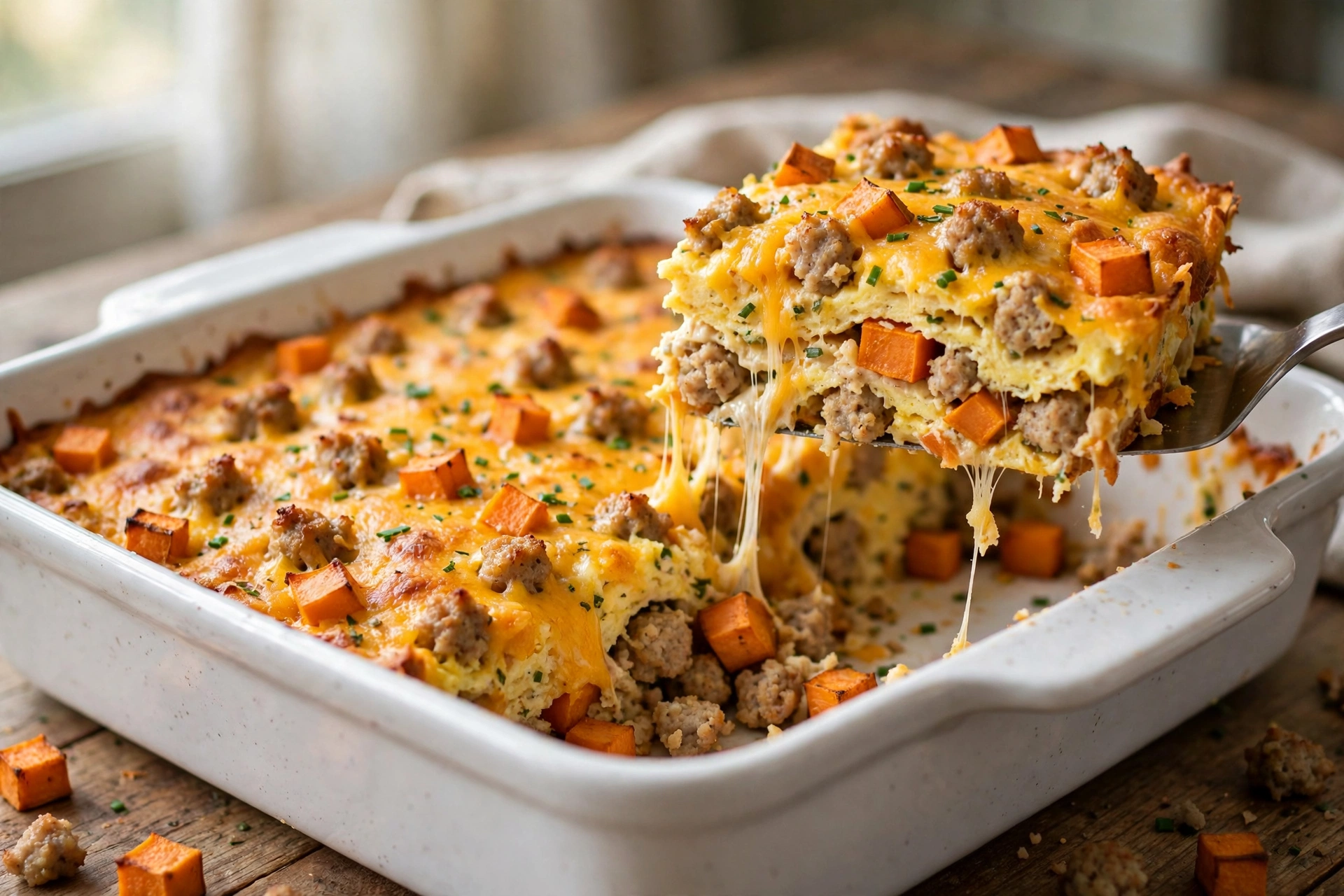
If your mornings run on coffee and good intentions, this high protein breakfast casserole is about to change your routine. Imagine opening the fridge to find a golden, savory egg bake loaded with turkey sausage, sweet potato, and melted cheddar — 30 grams of protein per slice, ready to reheat in 90 seconds.
Table of Contents
Here is the problem with most breakfasts: cereal leaves you hungry by 10 AM, and a drive-thru sandwich costs a fortune in both money and calories. This high protein breakfast casserole solves both. Spend 15 minutes assembling it on Sunday, bake it once, and breakfast is handled for the entire work week — warm, filling, and genuinely delicious.
Why You’ll Love This High Protein Breakfast Casserole
Most make-ahead breakfasts are either sad (microwaved oatmeal, again) or secretly dessert (looking at you, “healthy” muffins). This high protein breakfast casserole is neither. Here is why it earns a permanent spot in the rotation.
It keeps you full until lunch — actually full. With 30 grams of protein per serving, this casserole hits the satiety threshold that most breakfasts miss. Protein slows gastric emptying and tamps down ghrelin, the hunger hormone, which means no 10:30 AM vending machine run. Pair a slice with black coffee and you are genuinely set until midday.
One pan, zero morning effort. The entire recipe bakes in a single 9×13 dish. On busy weekdays, your “cooking” is microwaving a slice for 90 seconds. Sunday-you does 15 minutes of chopping; weekday-you does nothing.
It reheats like it was just baked. Unlike scrambled eggs, which turn rubbery overnight, a baked egg casserole stays tender for days. The cottage cheese blended into the egg base keeps every slice creamy, and the sweet potato holds its texture beautifully. Day-five slices taste just as good as day-one slices.
It is endlessly customizable. Think of this high protein breakfast casserole as a template, not a rulebook. Swap the sausage, change the vegetables, add heat — the base formula (eggs + egg whites + cottage cheese + mix-ins) works with almost anything in the crisper drawer.
Ingredients You’ll Need
This high protein breakfast casserole uses simple grocery-store ingredients. Nothing exotic, nothing you will use once and forget.

For the egg base:
- 10 large eggs
- 2 1/2 cups liquid egg whites (about 20 oz carton)
- 1 cup low-fat cottage cheese (2%)
- 1 teaspoon garlic powder
- 1 teaspoon onion powder
- 1 teaspoon smoked paprika
- 1 teaspoon kosher salt
- 1/2 teaspoon freshly ground black pepper
For the filling:
- 1 tablespoon olive oil
- 12 oz turkey breakfast sausage (casings removed if links)
- 2 cups sweet potato, peeled and cut into 1/2-inch cubes (about 1 large)
- 1 red bell pepper, diced
- 1/2 red onion, diced
- 2 cups fresh baby spinach, roughly chopped
- 1 cup shredded reduced-fat sharp cheddar cheese, divided
A note on the cottage cheese: Do not skip it and do not swap in ricotta without adjusting. Cottage cheese is the secret to the casserole’s creamy texture and adds 28 grams of protein to the whole pan. Blended into the egg base, it disappears completely — no curds, no lumps, just richness. If the texture of cottage cheese bothers you, blend it smooth before adding; you will never know it is there.
How to Make High Protein Breakfast Casserole (Step by Step)

Step 1: Prep the oven and dish. Preheat the oven to 375°F (190°C). Lightly grease a 9×13-inch baking dish with cooking spray or a thin layer of olive oil. This high protein breakfast casserole fills the dish nearly to the top, so do not use a smaller pan.
Step 2: Brown the turkey sausage. Heat the olive oil in a large skillet over medium-high heat. Add the turkey sausage, breaking it into small crumbles with a wooden spoon. Cook for 6–8 minutes until browned and cooked through. Transfer to a plate lined with paper towels. Do not wipe out the skillet — those browned bits are flavor.
Step 3: Soften the sweet potato and vegetables. In the same skillet over medium heat, add the sweet potato cubes with a pinch of salt and 1/4 cup of water. Cover and cook for 6–7 minutes, until the sweet potato is just fork-tender but not mushy. Uncover, add the bell pepper and red onion, and cook 3–4 more minutes until softened. Stir in the spinach and cook just until wilted, about 1 minute. Remove from heat. Pre-cooking the vegetables drives off moisture so the casserole sets firmly instead of turning watery.
Step 4: Blend the egg base. In a large mixing bowl, whisk the eggs, egg whites, cottage cheese, garlic powder, onion powder, smoked paprika, salt, and pepper until well combined. For the smoothest texture, give the cottage cheese a quick blitz with an immersion blender before whisking it in — or just whisk vigorously; small curds will melt into the bake.
Step 5: Assemble the casserole. Spread the sausage and vegetable mixture evenly in the prepared baking dish. Sprinkle half the cheddar over the top. Pour the egg mixture evenly over everything, then gently press the fillings down so they are submerged. Top with the remaining cheddar.
Step 6: Bake until just set. Bake for 40–45 minutes, until the edges are golden and puffed and the center jiggles only slightly when you shake the pan. A knife inserted in the center should come out mostly clean. Do not overbake — carryover heat finishes the center, and an extra 10 minutes turns a creamy casserole dry.
Step 7: Rest, then slice. Let the high protein breakfast casserole rest for 10–15 minutes before slicing. This is non-negotiable — the rest lets the eggs finish setting so you get clean, sturdy slices instead of a scramble. Cut into 8 equal portions. Serve warm, or portion into containers for the week.

Meal Prep and Storage Tips
This high protein breakfast casserole was designed for meal prep first and everything else second. Here is how to store it so every slice tastes freshly baked.
Refrigerator (up to 5 days). Cool the casserole completely (no more than 2 hours at room temperature), then slice into 8 portions. Store slices in airtight containers — glass containers with locking lids work best. Stack with small squares of parchment between slices if you layer them. The casserole stays tender and moist all week.
Freezer (up to 3 months). This high protein breakfast casserole freezes beautifully. Wrap individual slices tightly in plastic wrap, then place them in a freezer bag with the air pressed out. Or freeze the whole unsliced casserole in its dish, wrapped in two layers of foil. Label with the date. Add fresh garnishes like hot sauce or herbs after reheating, not before freezing.
How to reheat. From the fridge: microwave a slice on a plate for 60–90 seconds, or warm in a 350°F oven for 10–12 minutes. From frozen: thaw overnight in the fridge for best texture, then reheat as above. In a hurry, microwave a frozen slice at 50% power for 3–4 minutes, flipping halfway. The oven method gives the best texture (crispy edges!); the microwave gives the fastest breakfast.
Double-batch strategy. This recipe doubles cleanly across two 9×13 dishes — bake side by side, adding 5 extra minutes. One pan for the week, one for the freezer.
Nutrition and Macros
Here is the approximate nutrition per serving (recipe makes 8 generous slices):
- Calories: 320
- Protein: 30g
- Carbohydrates: 14g
- Fiber: 3g
- Fat: 15g
- Sodium: 600mg (less with no-salt-added sausage)
These numbers shift with your exact ingredients — full-fat cheddar adds about 2g fat per serving, pork sausage adds more. But the headline holds: 30 grams of protein for 320 calories is an outstanding ratio, delivering more than 9 grams of protein per 100 calories.
Why it works for weight loss: High-protein breakfasts consistently beat carb-heavy ones for appetite control. At 320 calories with 30g of protein, this high protein breakfast casserole keeps you full on fewer total calories — protein at breakfast is linked to reduced calorie intake later in the day. For more on daily protein targets, see this guide to how much protein you need per day.
Why it works for muscle gain: A single slice covers nearly a fifth of a typical 150g+ daily protein target before 8 AM. Eat two slices on training days and you hit 60g of protein before your first meeting.
Recipe Variations to Try
Once you have the base formula down, this high protein breakfast casserole becomes a weekly template. Try these:
Southwest style. Swap the sweet potato for diced russet potato, use pepper jack instead of cheddar, and add a 4 oz can of diced green chiles plus 1 teaspoon of cumin to the egg base. Serve with salsa and Greek yogurt.
Veggie-packed (vegetarian). Skip the sausage and double the vegetables: mushrooms, zucchini, and cherry tomatoes, plus a can of drained white beans for extra protein and fiber — still around 24g of protein per slice.
Dairy-free version. Replace the cottage cheese with 1 cup of unsweetened soy milk whisked with 2 tablespoons of nutritional yeast, and use dairy-free cheddar. Add an extra cup of egg whites to keep protein near 28g per serving.
Muffin-tin minis. Pour the same mixture into a greased 12-cup muffin tin (fill 3/4 full) and bake at 375°F for 20–22 minutes. You get 12 portable egg muffins — perfect for lunchboxes or portion-controlled snacking, about 20g of protein each.
Frequently Asked Questions
Can I assemble this high protein breakfast casserole the night before?
Yes — assemble through Step 5, cover tightly, and refrigerate overnight (up to 24 hours). In the morning, let the dish sit at room temperature for 20 minutes while the oven preheats, then bake as directed, adding 5 extra minutes.
Why is my casserole watery?
Three usual culprits: vegetables that were not pre-cooked (raw veggies release water as they bake), skipping the rest time after baking, or overbaking, which squeezes moisture out of the eggs. Follow the pre-cook in Step 3 and the 10–15 minute rest in Step 7 and you will get firm, creamy slices.
Can I use frozen vegetables?
Absolutely. Thaw them first and squeeze out as much water as possible in a clean kitchen towel — frozen spinach and bell pepper blends work great here. Add them at the same point as the fresh vegetables in Step 3, but skip the covered sweet-potato step if your blend has no potato in it.
How do I keep the eggs from turning rubbery when reheating?
Reheat gently: 60–90 seconds max in the microwave for a fridge-cold slice, or 50% power for frozen ones. The oven (350°F, 10–12 minutes, loosely covered with foil) gives the closest-to-fresh texture.
Is this casserole keto or low-carb?
At 14g of carbs per serving (11g net), it fits most low-carb plans. For keto, swap the sweet potato for cauliflower florets — that drops carbs to about 7g per serving.
Final Thoughts
This high protein breakfast casserole is the rare recipe that is genuinely easier than the alternative. Fifteen minutes of Sunday prep buys you five mornings of hot, 30-gram-protein breakfasts with zero decisions and zero dishes.
If you are building a full week of high-protein meal prep, pair this casserole with our Creamy High Protein Chicken Soup for lunches and our High Protein Chicken Meal Prep Bowls for dinners. Breakfast, lunch, dinner — 90+ grams of protein a day without thinking about it.

Bake a pan this Sunday and see how different your mornings feel. And if you try the southwest variation, it might just become your new default. Happy cooking!
High Protein Breakfast Casserole
Ingredients
Method
- Preheat oven to 375°F (190°C) and grease a 9×13-inch baking dish.
- Brown the turkey sausage in olive oil in a large skillet over medium-high heat, 6–8 minutes; transfer to a plate.
- In the same skillet, cook sweet potato cubes with a pinch of salt and 1/4 cup water, covered, 6–7 minutes; uncover, add bell pepper and onion, cook 3–4 minutes; stir in spinach until wilted.
- Whisk eggs, egg whites, cottage cheese, garlic powder, onion powder, smoked paprika, salt and pepper in a large bowl.
- Spread sausage and vegetables in the baking dish, sprinkle with half the cheddar, pour over the egg mixture, press fillings down, top with remaining cheddar.
- Bake 40–45 minutes until edges are golden and center is just set.
- Rest 10–15 minutes, then slice into 8 portions.