High Protein Egg Muffins: 22g Protein (30-Minute Meal Prep)

If your mornings are a race against the clock, these high protein egg muffins are about to become your secret weapon. Fluffy, savory, and loaded with 22 grams of protein per serving, they are the ultimate grab-and-go breakfast for anyone serious about high-protein meal prep.
I started making high protein egg muffins on Sunday nights when I realized my weekday breakfasts were the weakest link in my meal prep routine. Cereal left me hungry by 10 AM, and protein bars got old fast. These little muffins changed everything: one batch gives you a full week of breakfasts that reheat in under a minute and actually keep you full until lunch.
Table of Contents
Why You’ll Love This Recipe
There is a reason high protein egg muffins show up in nearly every meal prep guide on the internet — they check every box. First, they are genuinely easy: whisk, pour, bake, done. No special equipment beyond a standard muffin tin, and the whole recipe takes 30 minutes from cracking the first egg to pulling a golden batch from the oven.
Second, the protein payoff is real. Thanks to a smart combination of eggs, cottage cheese, turkey sausage, and feta, each two-muffin serving delivers 22 grams of complete protein. That is the kind of breakfast that keeps hunger hormones quiet for hours, which makes sticking to your nutrition goals dramatically easier.
Third, they are endlessly flexible. Do not like spinach? Swap in kale or diced zucchini. Vegetarian? Skip the turkey and double the feta. Feeding picky kids? Let everyone customize their own row of the muffin tin. Once you learn the base formula, high protein egg muffins become a template you can riff on forever.
Finally, they are built for meal prep. They store beautifully in the fridge for 5 days, freeze for up to 3 months, and reheat in the microwave in about 45 seconds. Make them once on Sunday and breakfast is solved until Friday.
Ingredients You’ll Need
This recipe makes 12 muffins (6 servings of 2 muffins each). Everything is a standard grocery store find:
- 12 large eggs
- 1 cup low-fat cottage cheese
- 6 oz cooked turkey breakfast sausage, crumbled (or diced turkey ham)
- 2 cups fresh baby spinach, roughly chopped
- 1/2 cup crumbled feta cheese
- 1/2 cup red bell pepper, finely diced
- 1/4 cup red onion, finely diced
- 1 teaspoon garlic powder
- 1/2 teaspoon smoked paprika
- 1/2 teaspoon fine sea salt
- 1/4 teaspoon freshly ground black pepper
- Olive oil spray or cooking spray, for the tin
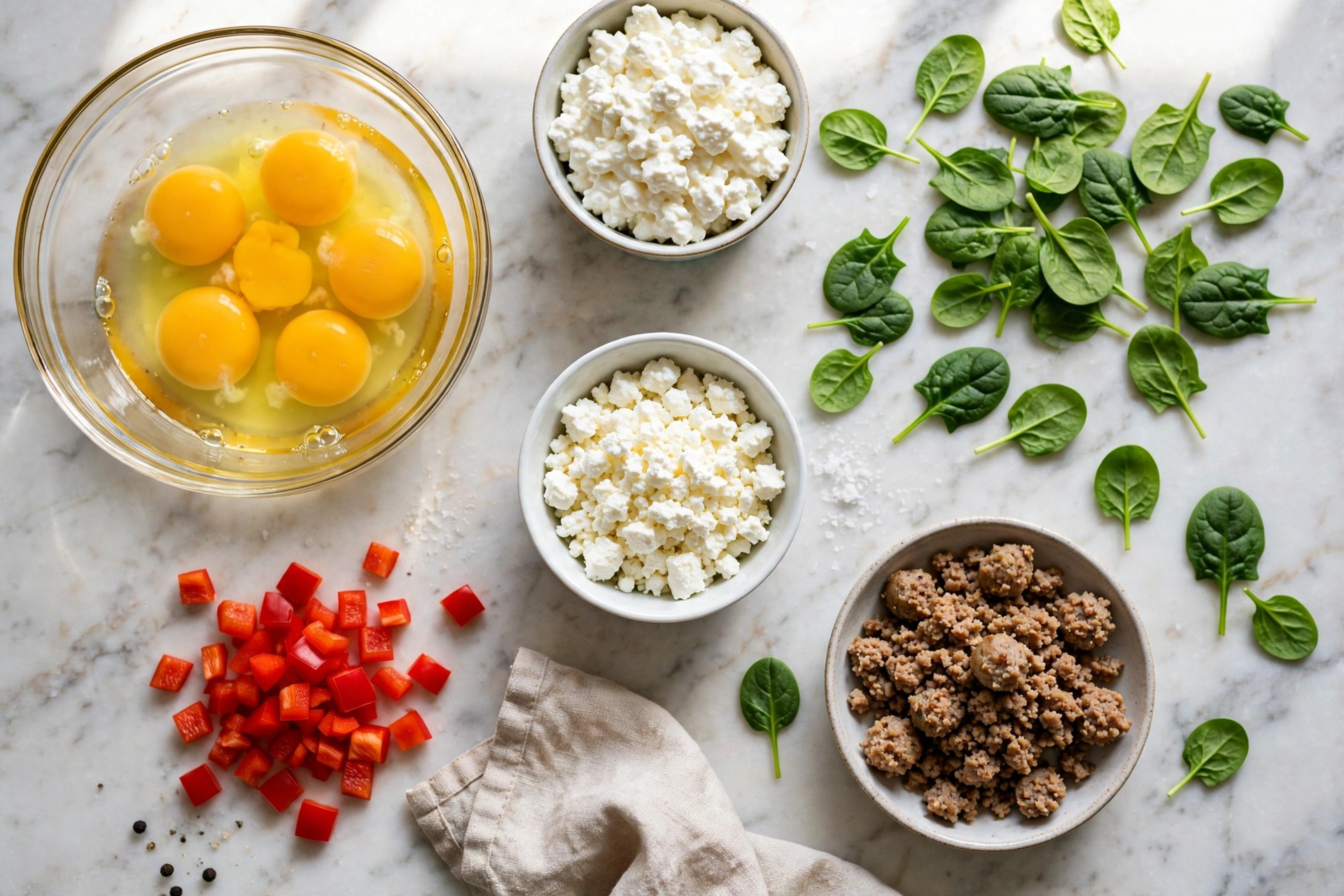
The cottage cheese is the quiet hero here. It melts into the eggs as they bake, making the muffins noticeably fluffier and adding about 5 grams of extra protein per serving — without any cottage-cheese taste in the finished muffins. If you are skeptical, trust the process; even cottage cheese skeptics never detect it.
For the turkey sausage, you can use pre-cooked breakfast sausage crumbles from the refrigerated section, or cook and crumble your own. Just make sure any meat going into the muffins is fully cooked before baking, since 20 minutes in the oven is not enough to cook raw sausage through safely.
How to Make High Protein Egg Muffins
- Preheat and prep. Heat your oven to 350°F (175°C). Generously coat a standard 12-cup muffin tin with olive oil spray, getting into every corner — egg muffins stick to dry tins like glue. Silicone muffin liners also work great if you have them.
- Whisk the base. In a large mixing bowl, crack in all 12 eggs. Add the cottage cheese, garlic powder, smoked paprika, salt, and black pepper. Whisk vigorously for a full 60 seconds until the mixture is smooth and slightly frothy. The cottage cheese will not fully blend in, and that is fine — small curds are normal.
- Add the fillings. Fold in the chopped spinach, crumbled turkey sausage, diced bell pepper, diced red onion, and crumbled feta. Stir until everything is evenly distributed.
- Fill the cups. Pour or ladle the mixture into the prepared muffin cups, filling each about three-quarters full. The muffins will puff up as they bake, so leave that headroom. Give the bowl a stir between cups so the chunky fillings distribute evenly instead of sinking to the last few cups.
- Bake. Slide the tin into the oven and bake for 18–22 minutes, until the centers are just set and the tops are lightly golden. They will jiggle very slightly when you shake the tin — that is perfect; carryover heat finishes them as they cool. Overbaking is the number one cause of rubbery egg muffins, so start checking at 18 minutes.
- Cool and release. Let the muffins rest in the tin for 5 minutes, then run a thin knife or small offset spatula around each one and lift them out onto a wire rack. Serve warm, or cool completely before packing for the week.

Total time: 10 minutes prep + 20 minutes bake = 30 minutes flat. While they bake, you have time to portion out the rest of your weekly meal prep — efficiency is the whole point.
High Protein Egg Muffins
Ingredients
Method
- Preheat oven to 350°F (175°C). Generously coat a 12-cup muffin tin with olive oil spray.
- In a large bowl, whisk eggs, cottage cheese, garlic powder, smoked paprika, salt, and pepper for 60 seconds until smooth and frothy.
- Fold in spinach, turkey sausage, bell pepper, red onion, and feta until evenly distributed.
- Fill each muffin cup three-quarters full, stirring the bowl between cups.
- Bake 18–22 minutes until centers are just set with a slight jiggle.
- Rest 5 minutes in the tin, then release with a thin knife and cool on a wire rack.
Notes
Meal Prep and Storage Tips
High protein egg muffins were practically invented for meal prep, but a few details make the difference between great and soggy by Thursday.
Refrigerating: Cool the muffins completely before storing — trapping steam is what makes them watery. Pack them in an airtight container lined with a paper towel (it absorbs excess moisture) and refrigerate for up to 5 days.
Reheating: Microwave 2 muffins on a plate for 40–60 seconds. For the best texture, reheat at 70% power so they warm through without turning rubbery. They are also perfectly good cold or at room temperature, which makes them ideal for desk drawers and gym bags.
Freezing: These freeze beautifully for up to 3 months. Flash-freeze the cooled muffins on a baking sheet for 1 hour, then transfer to a freezer bag with the air pressed out. Thaw overnight in the fridge or microwave from frozen for 90 seconds.
Batch strategy: One 12-muffin batch covers one person for 6 breakfasts. Meal prepping for two? Double the recipe and use two tins (or bake in two rounds). The recipe scales linearly with zero adjustments.

Anti-stick insurance: Even with spray, egg proteins bond to metal. If your tin is older, use silicone liners or parchment muffin cups for guaranteed easy release. A well-seasoned nonstick tin plus generous spray works too.
Nutrition and Macros
Here is the full nutrition breakdown per serving (2 muffins). These numbers are estimates calculated from the ingredient list:
- Calories: 260
- Protein: 22g
- Carbohydrates: 7g
- Fat: 15g
- Fiber: 1g
- Sodium: 620mg
That 22 grams of protein comes from complete, high-quality sources — eggs and dairy provide all nine essential amino acids, which matters for muscle repair and satiety. Research consistently shows that a protein-rich breakfast reduces overall calorie intake later in the day, which is exactly why these muffins are such a powerful meal prep staple. For a deeper look at why eggs are considered a gold-standard protein source, see Healthline’s breakdown of egg nutrition.
If you are tracking macros closely, the easiest lever to pull is the cheese: swapping feta for extra cottage cheese drops fat while keeping protein high, and using egg whites for half the eggs cuts calories further (though you will lose some of the rich flavor).
Recipe Variations
Once you have the base method down, high protein egg muffins become a weekly ritual you never get bored of. Try these spins:
- Denver style: Diced ham, bell pepper, and onion with sharp cheddar instead of feta. A diner classic in muffin form.
- Mediterranean: Sun-dried tomatoes, Kalamata olives, and extra feta with a pinch of oregano.
- Southwest: Black beans, corn, diced green chiles, and pepper jack cheese. Serve with salsa for dipping.
- Veggie-loaded: Mushrooms, zucchini, and cherry tomatoes with Parmesan. Sauté the mushrooms first so they do not release water into the muffins.
- Pizza muffins: Turkey pepperoni, diced tomatoes (patted dry), mozzarella, and Italian seasoning. Kids demolish these.
- Dairy-free: Skip the cottage cheese and feta, add an extra egg plus 2 tablespoons of nutritional yeast for a cheesy flavor and a protein boost.
A quick note on add-ins: keep total chunky fillings to about 2 to 2.5 cups per 12-egg batch. Overloading the tin is the most common reason muffins fall apart — the egg needs to be the structural glue.
Frequently Asked Questions
Can I make high protein egg muffins without a muffin tin?
Yes. Pour the mixture into a greased 8×8-inch baking dish and bake at 350°F for 25–30 minutes, then cut into 12 squares. The texture is identical; you just lose the grab-and-go shape.
Why did my egg muffins turn out rubbery?
Almost always overbaking. Pull them when the centers still have the faintest jiggle — carryover heat finishes the job. Also, reheating at full microwave power toughens them; use 70% power.
Can I use egg whites instead of whole eggs?
You can replace up to half the eggs with egg whites to cut calories, but going 100% egg white makes the muffins spongy and bland. The yolks carry most of the flavor and nutrients, so keep at least half whole eggs.
How long do egg muffins last in the fridge?
5 days in an airtight container. If they smell off or feel slimy before that, toss them — but properly cooled and stored muffins easily make it to Friday from a Sunday bake.
Are egg muffins keto-friendly?
Yes — at roughly 7g carbs per two-muffin serving, this recipe fits comfortably into a ketogenic eating pattern. For strict keto, use full-fat cottage cheese and skip the bell pepper and onion.
Can I add protein powder?
It is not recommended. Protein powder makes baked eggs chalky and dry. The eggs, cottage cheese, turkey, and feta already deliver 22g per serving — no powder needed.
Final Thoughts
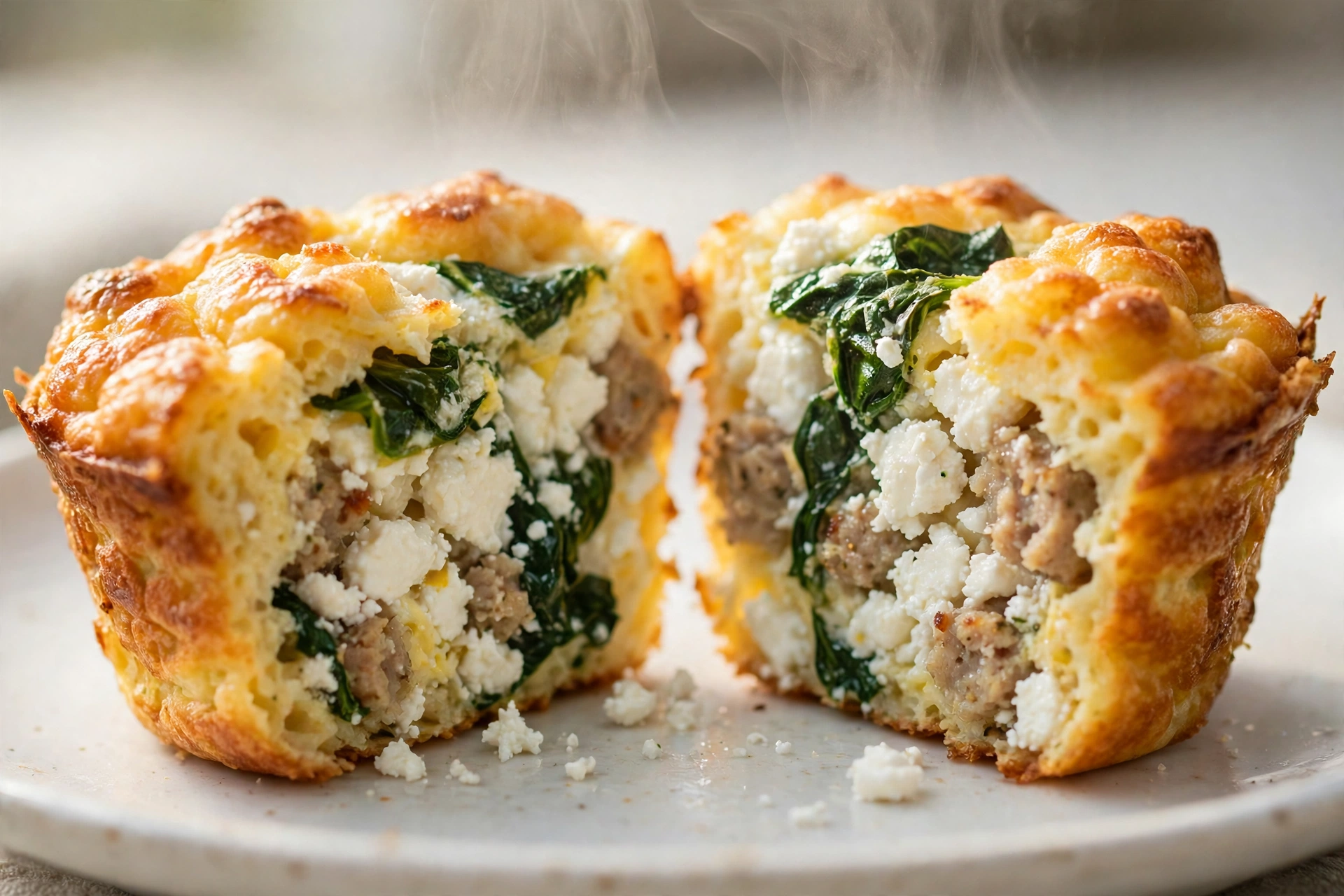
If you only add one recipe to your breakfast meal prep rotation this month, make it these high protein egg muffins. Thirty minutes on Sunday buys you six mornings of a hot, satisfying, 22-gram-protein breakfast — no drive-thru, no sad desk cereal, no 10 AM vending machine run.
They also pair perfectly with the rest of a high-protein week. Serve them alongside my High Protein Turkey Meatballs Meal Prep for lunches and my High Protein Breakfast Casserole when you are feeding a weekend crowd, and your protein goals basically take care of themselves.
Make a batch this weekend and tell me your favorite variation — I have a feeling the pizza muffins are going to steal the show.