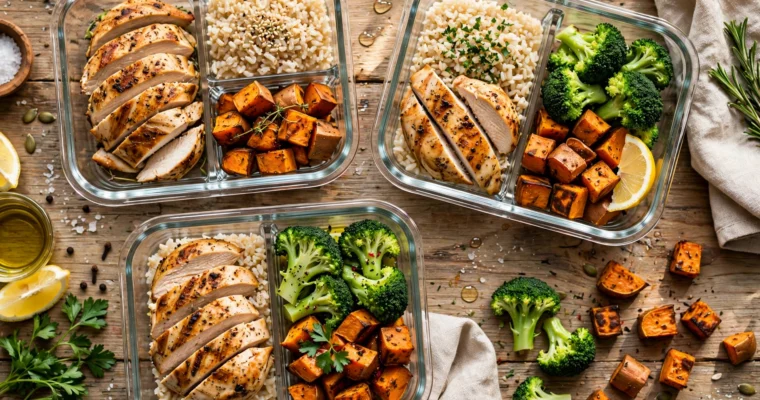
If you are tired of dry chicken breast and sad desk salads, this high protein turkey meatballs meal prep is the reset your lunch routine needs. Imagine opening the fridge on a busy Tuesday and finding five ready-to-go bowls, each one loaded with juicy, golden-brown …
If your weekly lunch routine is stuck on sad salads or overpriced takeout, this high protein ground beef meal prep is about to change everything. Picture five meal prep containers, each one loaded with fluffy brown rice, juicy seasoned ground beef, creamy black beans, sweet …
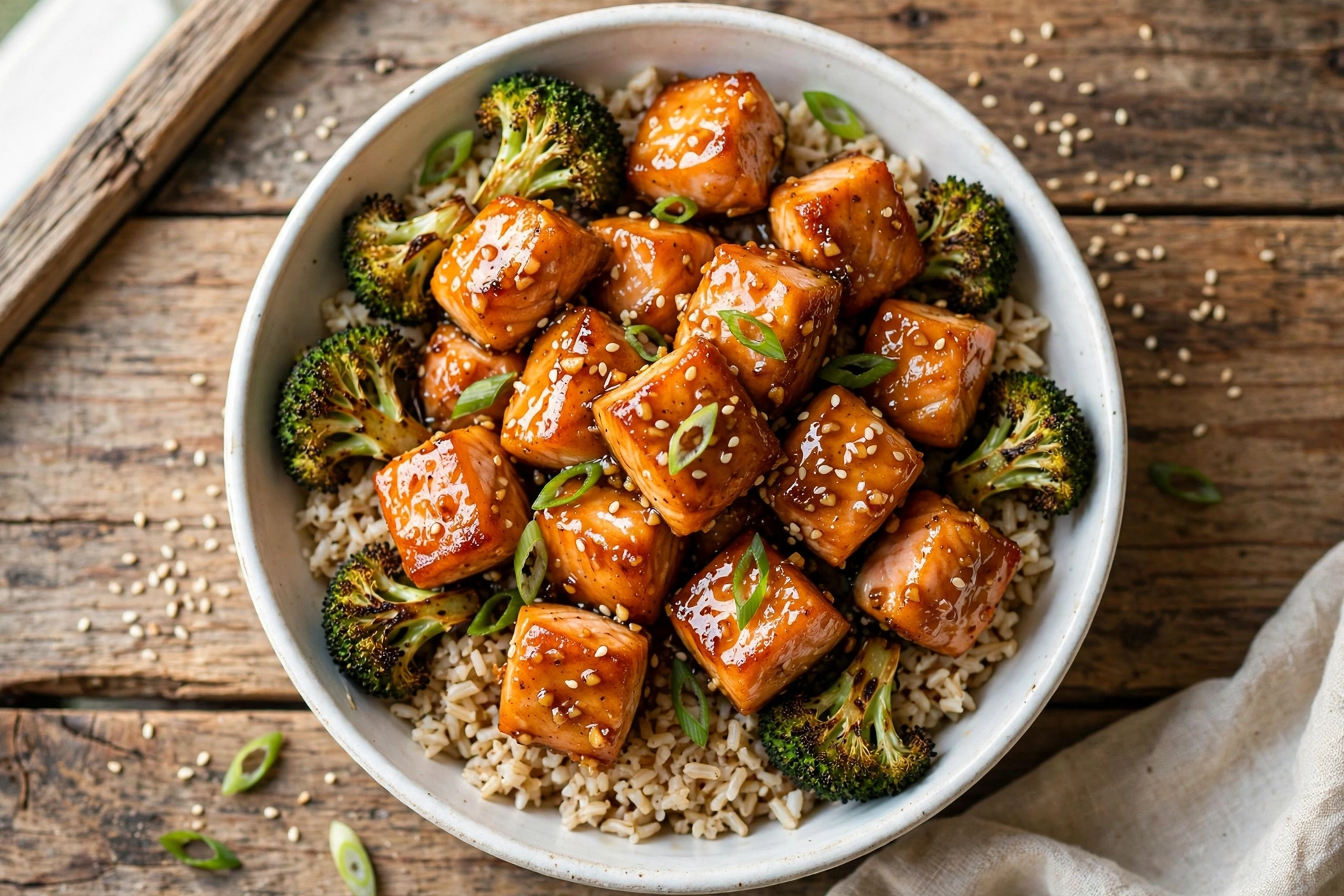
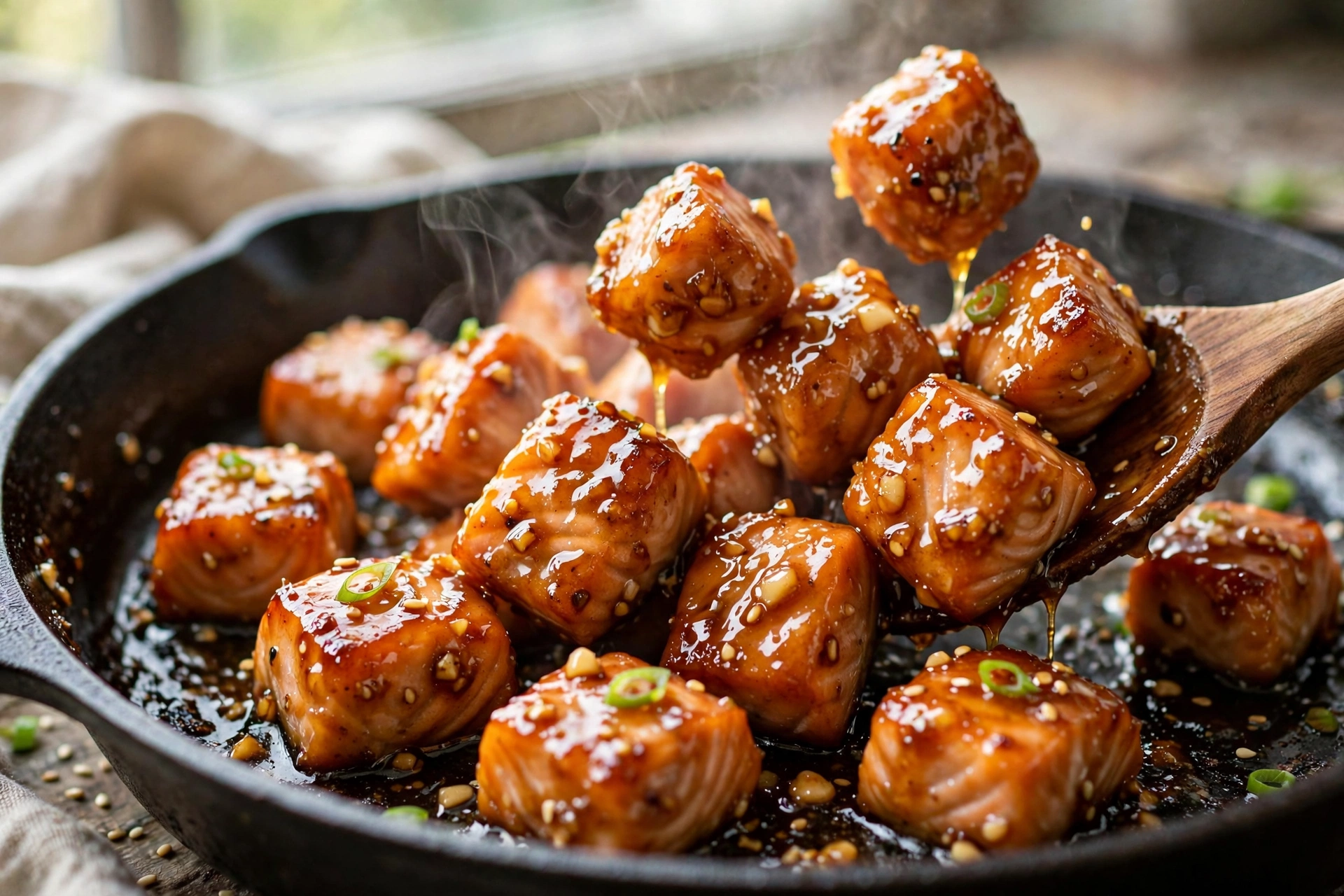
There is a reason this high protein salmon has become my most-requested weeknight dinner: crispy, caramelized salmon bites coated in a sticky honey-garlic glaze, piled over fluffy brown rice with roasted broccoli. Each bowl carries 38 grams of protein, takes just 30 minutes from fridge to table, and reheats beautifully — a high protein salmon meal prep recipe worth putting in your rotation.
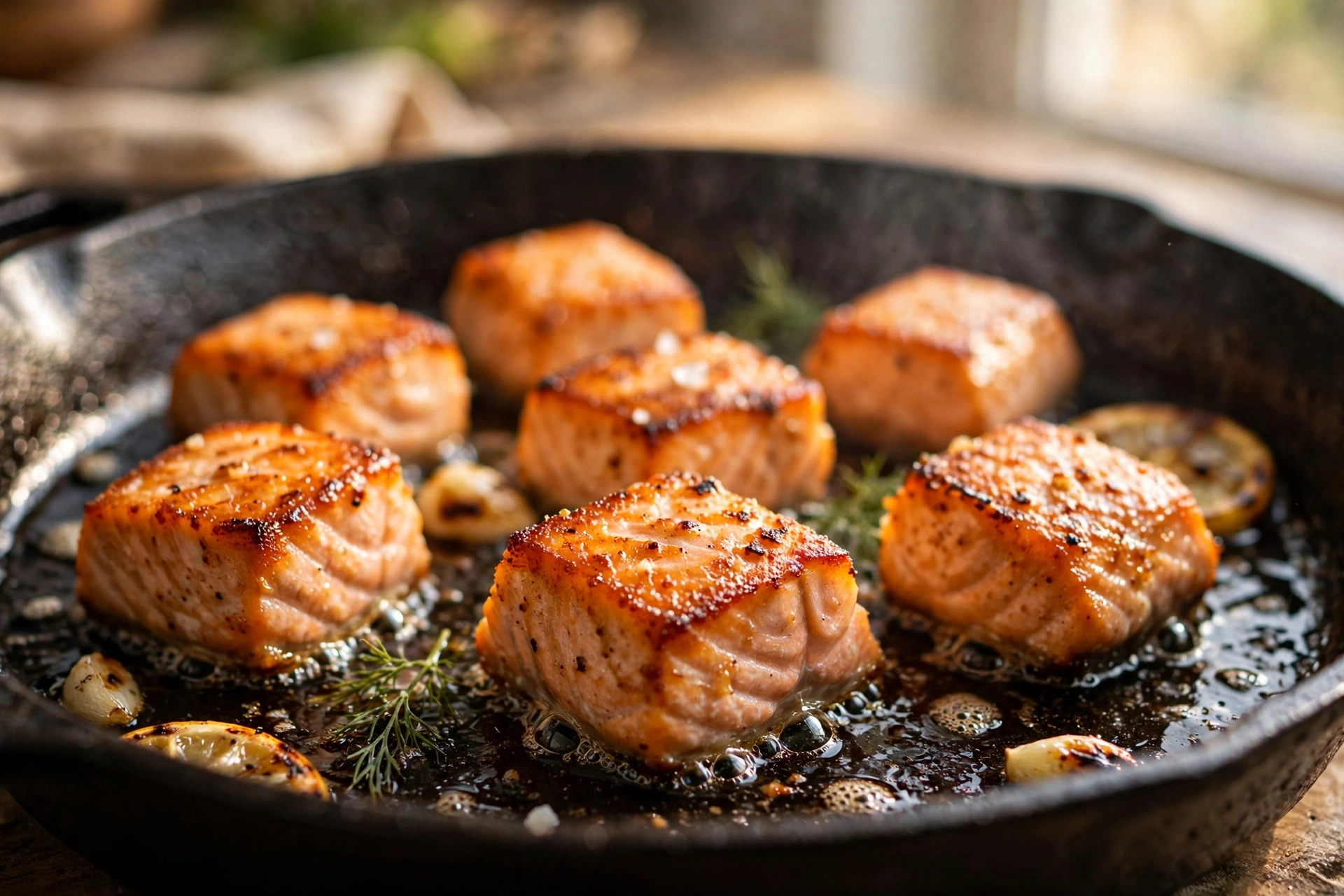
Salmon is already a protein powerhouse, but the way you cook it decides whether it becomes a sad, dry fillet or the kind of dinner you crave. Cutting the salmon into bite-size cubes and searing them hot gives you maximum crispy surface area, and the honey-garlic glaze lacquers every piece in sweet-savory flavor. Paired with fiber-rich brown rice and roasted broccoli, this high protein salmon bowl is a complete meal in one container — no side dishes, no guesswork, just balanced macros that keep you full for hours.
Table of Contents
Why You’ll Love This High Protein Salmon
This is not the bland baked salmon of sad diet lore. It is the dinner that makes people ask for the recipe. Here is why this high protein salmon earns a permanent spot in your weekly lineup.
38 grams of protein per bowl. A dinner with 38 grams of protein crushes evening hunger, supports muscle recovery after training, and keeps you satisfied until breakfast. Salmon’s protein is complete — it delivers all the essential amino acids your body cannot make on its own. According to Healthline’s breakdown of salmon nutrition, a single serving also brings meaningful omega-3s, vitamin D, and B vitamins to the table. Healthline’s salmon nutrition guide has the full breakdown of its omega-3s and vitamins.
30 minutes, one skillet plus a sheet pan. While the broccoli roasts, the salmon sears in 6 minutes and the glaze takes 2. Everything finishes together on one sheet pan and one skillet.
Meal prep that actually reheats well. Salmon gets a bad reputation for meal prep because overcooked fillets turn chalky on day two. These small, glaze-coated bites are the fix: the glaze locks in moisture and a gentle reheat brings them right back.
Sweet, savory, and a little spicy. The honey-garlic glaze hits every note: honey for caramelization, soy sauce for umami depth, garlic for punch, and a whisper of sriracha heat. It takes five ingredients and two minutes.
Ingredients You’ll Need
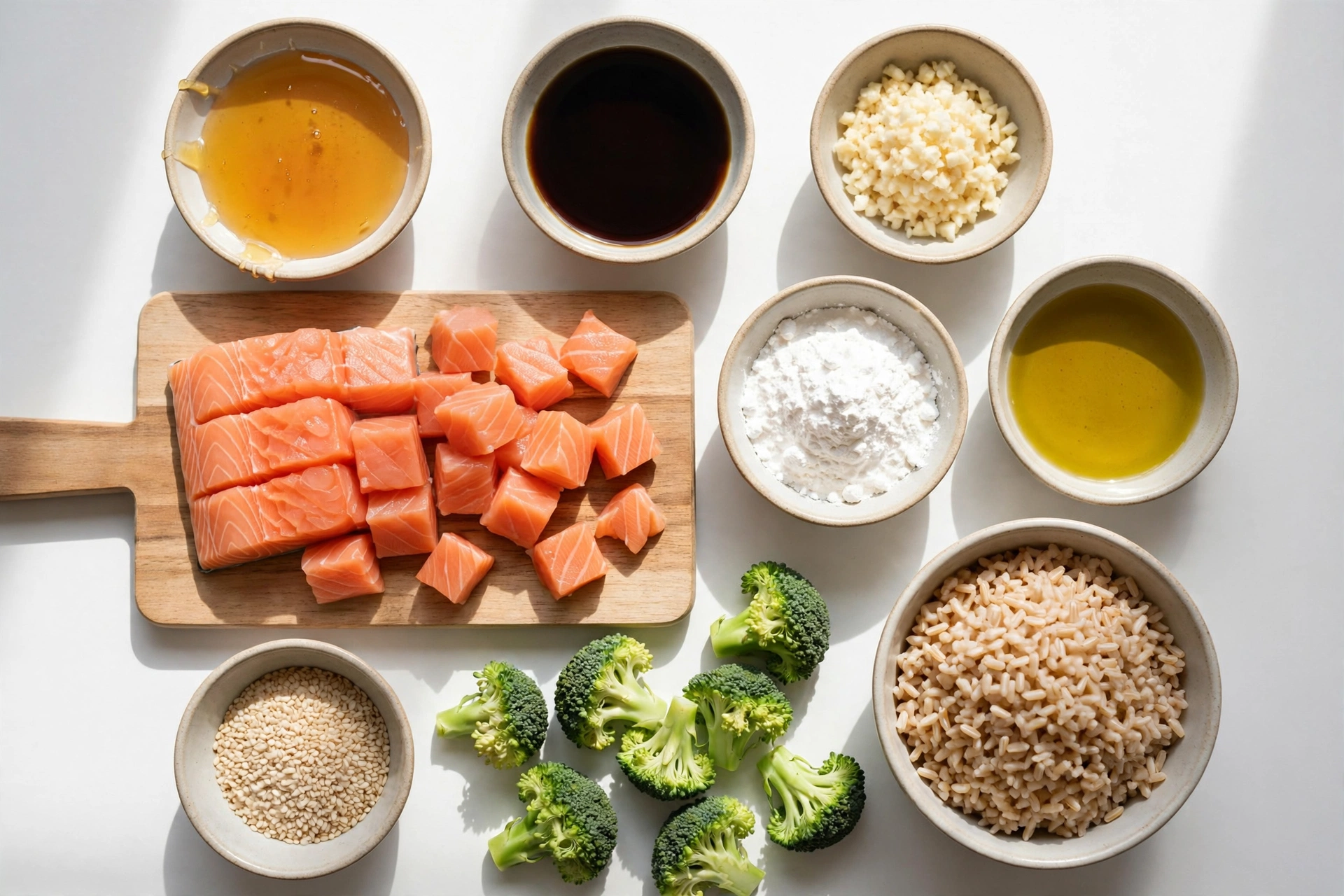
This high protein salmon uses simple grocery-store ingredients. Nothing exotic, nothing you cannot find in a regular supermarket.
A note on the salmon: Look for fillets that are at least 1 inch thick with vibrant color and no fishy smell — fresh salmon should smell like the ocean, not like fish. Sockeye or Atlantic both work beautifully here. If your fillet has skin, slide a sharp knife between the skin and flesh to remove it before cubing; the cubes crisp better without skin in this recipe.
A note on the cornstarch: Do not skip it. That light dusting is what gives the salmon bites their shatteringly crisp exterior in the hot skillet. It is a restaurant trick that costs you one tablespoon and about thirty seconds.
How to Make High Protein Salmon (Step by Step)
Step 1: Roast the broccoli. Heat the oven to 425°F. Toss the broccoli florets with 1 tablespoon of the olive oil, a pinch of salt and pepper, and spread in a single layer on a sheet pan. Roast 18–20 minutes, flipping once, until the edges are browned and crisp. The charred bits are the best part — do not pull the pan early.
Step 2: Season the salmon. Pat the salmon cubes completely dry with paper towels — dry surface is non-negotiable for a good sear. Toss the cubes with the cornstarch, salt, pepper, garlic powder, and paprika until every piece is evenly coated. Let them sit while the pan heats.
Step 3: Sear the bites. Heat the remaining tablespoon of olive oil in a large skillet (cast iron if you have it) over medium-high heat until it shimmers. Add the salmon cubes in a single layer — work in two batches if needed, because crowded salmon steams instead of sears. Cook 2–3 minutes per side, turning once, until deeply golden and crisp on at least two sides. Transfer to a plate.
Step 4: Mix the glaze. While the salmon sears, whisk together the honey, soy sauce, rice vinegar, sriracha, minced garlic, and sesame oil in a small bowl. This is your entire sauce — five minutes of work for a glaze that tastes like it simmered all day.
Step 5: Glaze the salmon. Reduce the skillet heat to medium. Pour the glaze into the same skillet and let it bubble for 60–90 seconds until slightly thickened — it should coat the back of a spoon. Return the salmon bites to the pan and toss gently for 1–2 minutes until every cube is lacquered and sticky. Pull the pan off the heat immediately; the glaze keeps thickening as it cools.
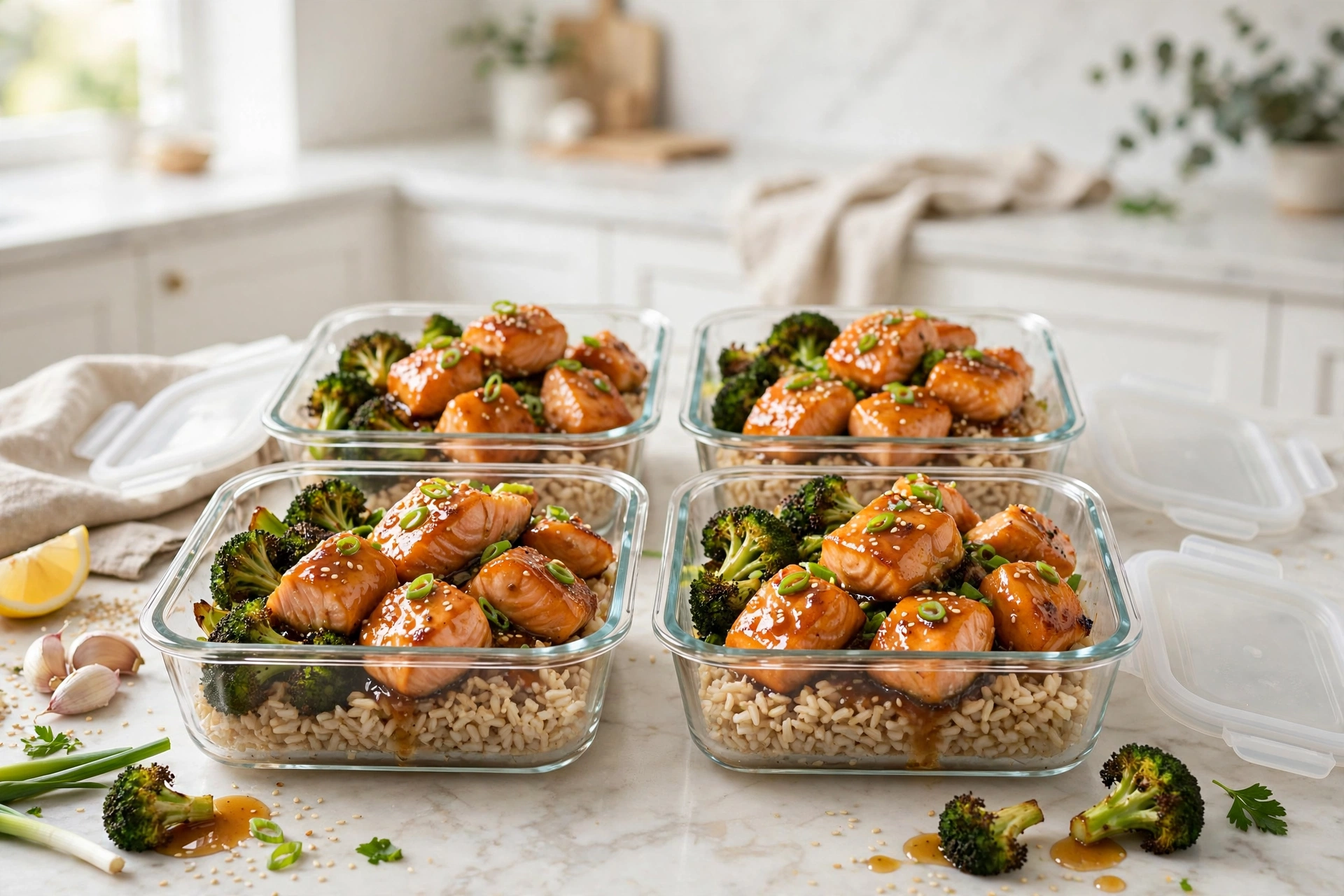
Step 6: Build the bowls. Divide the brown rice among four bowls or meal prep containers. Add a scoop of roasted broccoli and a generous portion of glazed salmon bites. Drizzle any remaining glaze from the skillet over the top — that liquid gold should never go to waste.
Step 7: Garnish and serve. Shower each bowl with sesame seeds and sliced green onions. Serve immediately for the crispiest texture, or pack for meal prep (see below).
Meal Prep and Storage Tips
This high protein salmon was designed with the meal prep crowd in mind. Here is exactly how to store and reheat a batch so day-three salmon still tastes great.
Portion into glass containers. Divide the rice, broccoli, and glazed salmon bites among four airtight containers. Glass reheats more evenly than plastic and will not hold onto the glaze’s color or smell. Keep the sesame seeds and green onions in a small separate bag or container and add them after reheating — they stay fresh and crunchy that way.
Fridge life: 3–4 days. The assembled bowls keep in the refrigerator for up to 4 days. The glaze acts like a protective coat, keeping the salmon bites moist far better than plain cooked salmon.
Reheat gently. This is the one rule that matters. Microwave at 50–70% power for 2–3 minutes, or warm in a covered skillet over medium-low heat with a splash of water. High heat is what makes reheated salmon chalky — gentle heat keeps it silky. They are also excellent cold over a big salad.
Freeze for up to 2 months. Freeze the salmon bites and rice (hold the broccoli, which goes limp) in freezer-safe containers for up to 2 months. Thaw overnight in the fridge, then reheat gently. Add freshly roasted or steamed broccoli when you serve.
Double the glaze. If you are a sauce person, make a double batch of the honey-garlic glaze and store the extra in a jar in the fridge for up to a week. It is incredible drizzled over the reheated bowls — or over chicken, shrimp, or roasted vegetables later in the week.
Nutrition and Macros
Each high protein salmon bowl (recipe makes 4) delivers approximately:
Calories: 670
Protein: 38g
Carbohydrates: 60g
Fat: 18g
Fiber: 4g
Omega-3s: ~1.5g (from the salmon)
Those numbers come from real, whole-food ingredients: omega-3-rich salmon, fiber-filled brown rice and broccoli, and a glaze built on honey and soy sauce rather than refined sugar bombs. To lighten the bowl, swap the brown rice for cauliflower rice — you will land around 480 calories with the protein still at 36 grams.
Recipe Variations
Once you have the sear-and-glaze method down, this high protein salmon becomes a template. Try these spins:
Spicy bang bang salmon. Swap the honey-garlic glaze for a bang bang sauce: 1/3 cup light mayo, 2 tablespoons sriracha, 1 tablespoon honey, 1 teaspoon rice vinegar. Toss the crispy bites in it off the heat. Same 38 grams of protein, totally different personality.
Mediterranean salmon bowls. Skip the glaze and season the bites with oregano, lemon zest, and smoked paprika instead. Serve over quinoa with cucumber, cherry tomatoes, and a dollop of tzatziki. Bright, fresh, and just as high in protein.
Teriyaki salmon meal prep. Replace the honey-garlic glaze with a quick teriyaki: 1/4 cup low-sodium soy sauce, 2 tablespoons honey, 1 tablespoon rice vinegar, 1 teaspoon grated ginger, 1 teaspoon cornstarch whisked in. Simmer until glossy and toss with the bites.
Low-carb salmon plates. Serve the glazed bites over cauliflower rice with roasted asparagus instead of broccoli. Roughly 8 grams of net carbs and 36 grams of protein per plate.
Frequently Asked Questions
Can I use frozen salmon for this high protein salmon recipe? Yes — thaw it completely first, overnight in the fridge or under cold running water for 30 minutes. Pat it extra dry before cubing, since thawed salmon releases more moisture. The sear will not crisp properly on wet fish.
How do I know when the salmon bites are done? They are done when the exterior is deeply golden and the center flakes with gentle pressure but still looks slightly translucent — about 2–3 minutes per side over medium-high heat. Salmon keeps cooking off the heat, so pull the bites a touch early.
Is salmon good for meal prep? It is, with the right method — and this is it. Small glazed bites reheat far better than whole fillets because the glaze locks in moisture and the small size warms through quickly without overcooking. Gentle reheating (medium microwave power or a covered skillet) keeps them silky through day four.
Can I make this high protein salmon in the air fryer? Absolutely. Air fry the seasoned cubes at 400°F for 7–9 minutes, shaking the basket once, then toss with the warmed glaze. You get the same crispy edges with even less oil.
What can I serve with high protein salmon besides rice and broccoli? Quinoa, jasmine rice, roasted sweet potatoes, or cauliflower rice all work. For vegetables, try asparagus, green beans, snap peas, or a simple cucumber salad. The honey-garlic glaze plays well with almost anything.
How long does cooked salmon last in the fridge? Properly stored in an airtight container, cooked salmon keeps 3–4 days in the refrigerator. If it smells off or the texture turns slimy, discard it — when in doubt, throw it out.
Final Thoughts
If your meal prep rotation has been all chicken, all the time, this high protein salmon is the shake-up it needs. Thirty minutes, one skillet and a sheet pan, 38 grams of protein per bowl, and a honey-garlic glaze you will want to put on everything. Make a batch this Sunday and thank yourself all week.
For more high protein meal prep ideas, try our high protein chicken pasta for another 30-minute dinner win, or our cozy high protein soup when you want something warm and comforting. Happy prepping!
High Protein Honey Garlic Salmon Bites
Crispy salmon bites tossed in a sticky honey-garlic glaze, served over brown rice with roasted broccoli. 38g protein per bowl and ready in 30 minutes.
1 1/4lbssalmon filletsskin removed, cut into 1 1/2-inch cubes
1tablespooncornstarch
1teaspoonkosher salt
1/2teaspoonblack pepper
1teaspoongarlic powder
1/2teaspoonpaprika
2tablespoonsolive oildivided
1/4cuphoney
3tablespoonslow-sodium soy sauce
2tablespoonsrice vinegar
1tablespoonsrirachaoptional
3clovesgarlicminced
1teaspoonsesame oil
3cupscooked brown ricefrom 1 cup dry
4cupsbroccoli floretsabout 1 large head
1tablespoonsesame seeds
3green onionsthinly sliced
Method
Roast the broccoli: Heat oven to 425°F. Toss broccoli with 1 tablespoon olive oil, salt, and pepper. Roast 18-20 minutes, flipping once, until browned and crisp at the edges.
Season the salmon: Pat salmon cubes completely dry. Toss with cornstarch, salt, pepper, garlic powder, and paprika until evenly coated.
Sear the bites: Heat remaining 1 tablespoon olive oil in a large skillet over medium-high heat. Sear salmon in a single layer 2-3 minutes per side until deeply golden and crisp. Work in batches if needed. Transfer to a plate.
Mix the glaze: Whisk honey, soy sauce, rice vinegar, sriracha, minced garlic, and sesame oil in a small bowl.
Glaze the salmon: Reduce heat to medium. Simmer glaze in the skillet 60-90 seconds until slightly thickened. Return salmon and toss 1-2 minutes until lacquered and sticky.
Build the bowls: Divide rice among 4 bowls, add broccoli and salmon bites, and drizzle with remaining glaze.
Garnish and serve: Top with sesame seeds and sliced green onions. Serve immediately or pack into meal prep containers.
Notes
Nutrition per serving: 670 calories, 38g protein, 60g carbohydrates, 18g fat, 4g fiber. For meal prep, store in airtight glass containers up to 4 days and reheat gently at medium microwave power or in a covered skillet. Salmon bites can be air-fried at 400°F for 7-9 minutes instead of pan-searing. Double the glaze and keep extra in the fridge up to 1 week.
Some mornings need a breakfast that works as hard as you do — and this high protein breakfast burrito delivers. Picture a warm whole-wheat tortilla wrapped around fluffy scrambled eggs, savory turkey breakfast sausage, creamy black beans, melted cheddar, and sweet bell peppers. One burrito …
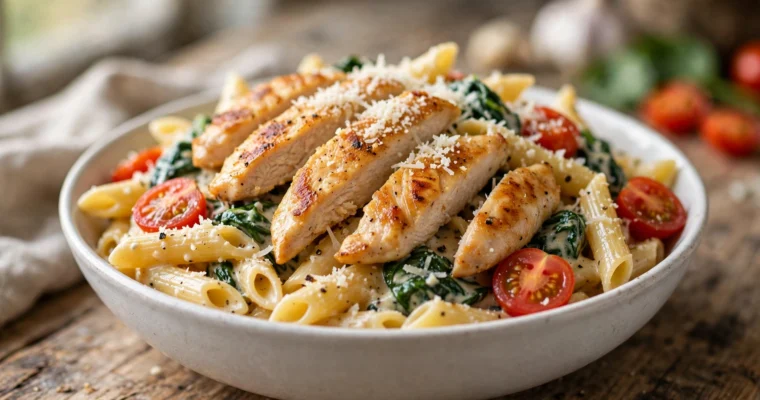
Creamy pasta and 40 grams of protein in the same bowl — this high protein chicken pasta proves you never have to choose between comfort food and your macros. Picture penne folded through a light, velvety parmesan sauce, piled with golden seared chicken breast strips, …
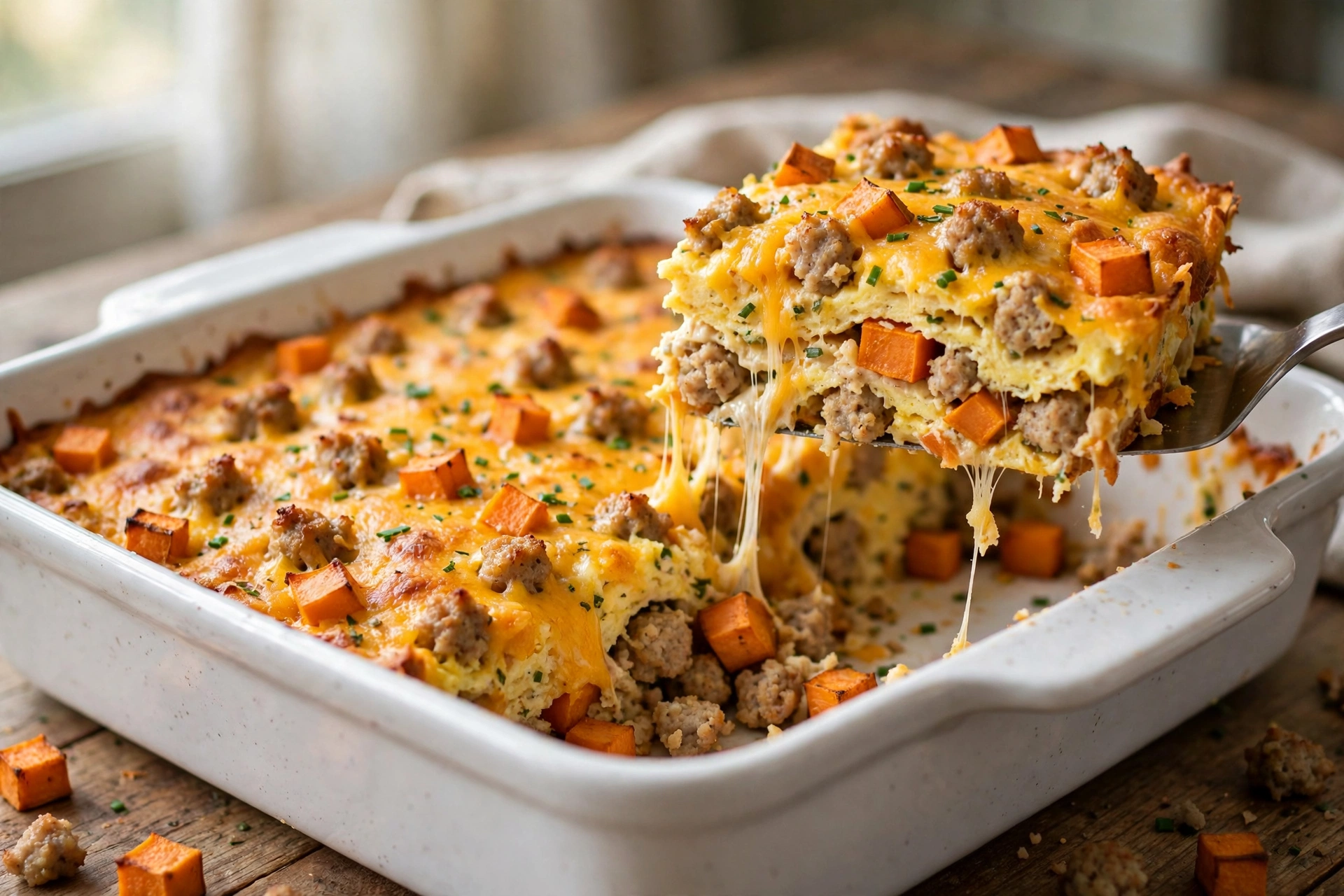
If your mornings run on coffee and good intentions, this high protein breakfast casserole is about to change your routine. Imagine opening the fridge to find a golden, savory egg bake loaded with turkey sausage, sweet potato, and melted cheddar — 30 grams of protein per slice, ready to reheat in 90 seconds.
Table of Contents
Here is the problem with most breakfasts: cereal leaves you hungry by 10 AM, and a drive-thru sandwich costs a fortune in both money and calories. This high protein breakfast casserole solves both. Spend 15 minutes assembling it on Sunday, bake it once, and breakfast is handled for the entire work week — warm, filling, and genuinely delicious.
Why You’ll Love This High Protein Breakfast Casserole
Most make-ahead breakfasts are either sad (microwaved oatmeal, again) or secretly dessert (looking at you, “healthy” muffins). This high protein breakfast casserole is neither. Here is why it earns a permanent spot in the rotation.
It keeps you full until lunch — actually full. With 30 grams of protein per serving, this casserole hits the satiety threshold that most breakfasts miss. Protein slows gastric emptying and tamps down ghrelin, the hunger hormone, which means no 10:30 AM vending machine run. Pair a slice with black coffee and you are genuinely set until midday.
One pan, zero morning effort. The entire recipe bakes in a single 9×13 dish. On busy weekdays, your “cooking” is microwaving a slice for 90 seconds. Sunday-you does 15 minutes of chopping; weekday-you does nothing.
It reheats like it was just baked. Unlike scrambled eggs, which turn rubbery overnight, a baked egg casserole stays tender for days. The cottage cheese blended into the egg base keeps every slice creamy, and the sweet potato holds its texture beautifully. Day-five slices taste just as good as day-one slices.
It is endlessly customizable. Think of this high protein breakfast casserole as a template, not a rulebook. Swap the sausage, change the vegetables, add heat — the base formula (eggs + egg whites + cottage cheese + mix-ins) works with almost anything in the crisper drawer.
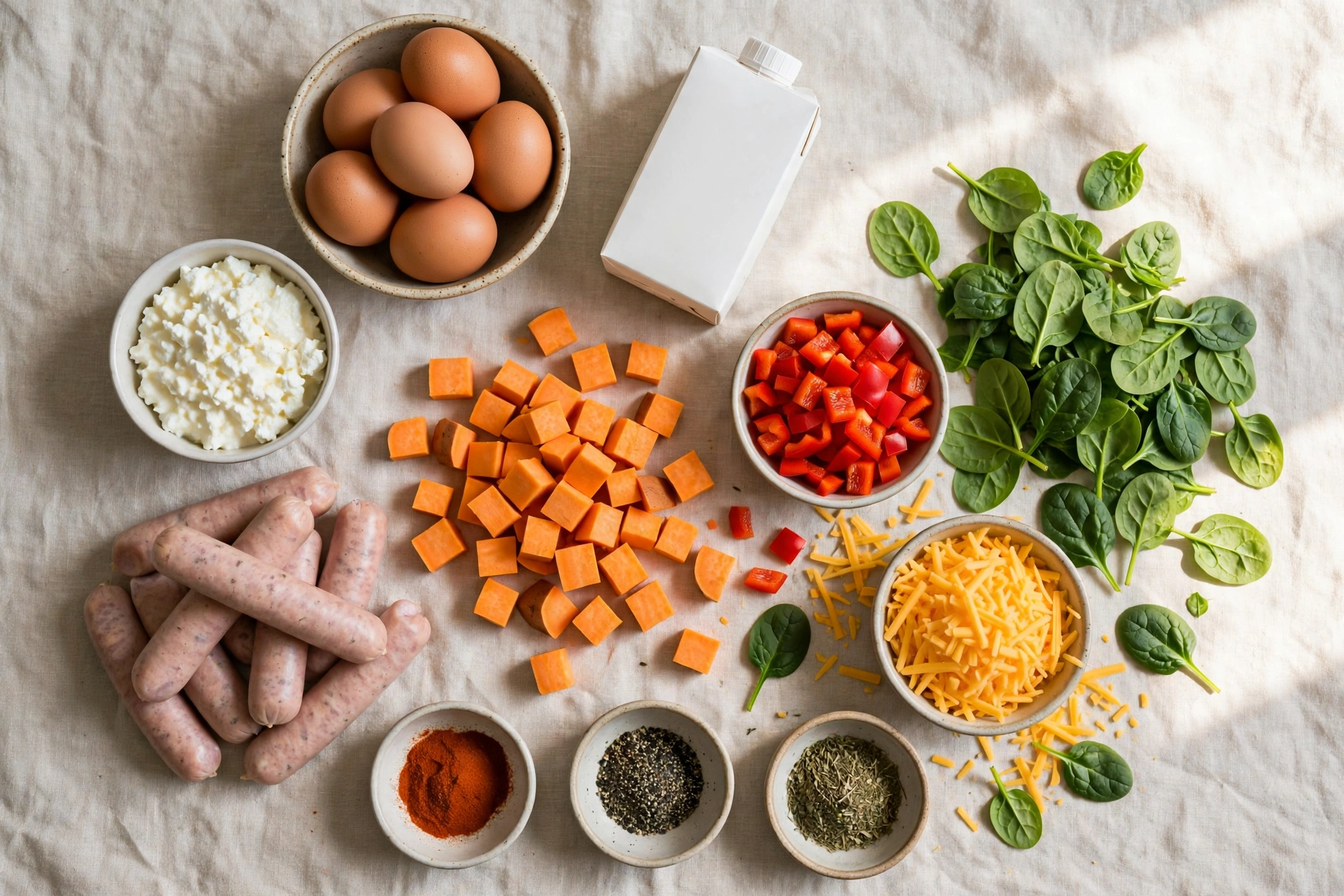
Ingredients You’ll Need
This high protein breakfast casserole uses simple grocery-store ingredients. Nothing exotic, nothing you will use once and forget.
For the egg base:
10 large eggs
2 1/2 cups liquid egg whites (about 20 oz carton)
1 cup low-fat cottage cheese (2%)
1 teaspoon garlic powder
1 teaspoon onion powder
1 teaspoon smoked paprika
1 teaspoon kosher salt
1/2 teaspoon freshly ground black pepper
For the filling:
1 tablespoon olive oil
12 oz turkey breakfast sausage (casings removed if links)
2 cups sweet potato, peeled and cut into 1/2-inch cubes (about 1 large)
1 red bell pepper, diced
1/2 red onion, diced
2 cups fresh baby spinach, roughly chopped
1 cup shredded reduced-fat sharp cheddar cheese, divided
A note on the cottage cheese: Do not skip it and do not swap in ricotta without adjusting. Cottage cheese is the secret to the casserole’s creamy texture and adds 28 grams of protein to the whole pan. Blended into the egg base, it disappears completely — no curds, no lumps, just richness. If the texture of cottage cheese bothers you, blend it smooth before adding; you will never know it is there.
How to Make High Protein Breakfast Casserole (Step by Step)
Step 1: Prep the oven and dish. Preheat the oven to 375°F (190°C). Lightly grease a 9×13-inch baking dish with cooking spray or a thin layer of olive oil. This high protein breakfast casserole fills the dish nearly to the top, so do not use a smaller pan.
Step 2: Brown the turkey sausage. Heat the olive oil in a large skillet over medium-high heat. Add the turkey sausage, breaking it into small crumbles with a wooden spoon. Cook for 6–8 minutes until browned and cooked through. Transfer to a plate lined with paper towels. Do not wipe out the skillet — those browned bits are flavor.
Step 3: Soften the sweet potato and vegetables. In the same skillet over medium heat, add the sweet potato cubes with a pinch of salt and 1/4 cup of water. Cover and cook for 6–7 minutes, until the sweet potato is just fork-tender but not mushy. Uncover, add the bell pepper and red onion, and cook 3–4 more minutes until softened. Stir in the spinach and cook just until wilted, about 1 minute. Remove from heat. Pre-cooking the vegetables drives off moisture so the casserole sets firmly instead of turning watery.
Step 4: Blend the egg base. In a large mixing bowl, whisk the eggs, egg whites, cottage cheese, garlic powder, onion powder, smoked paprika, salt, and pepper until well combined. For the smoothest texture, give the cottage cheese a quick blitz with an immersion blender before whisking it in — or just whisk vigorously; small curds will melt into the bake.
Step 5: Assemble the casserole. Spread the sausage and vegetable mixture evenly in the prepared baking dish. Sprinkle half the cheddar over the top. Pour the egg mixture evenly over everything, then gently press the fillings down so they are submerged. Top with the remaining cheddar.
Step 6: Bake until just set. Bake for 40–45 minutes, until the edges are golden and puffed and the center jiggles only slightly when you shake the pan. A knife inserted in the center should come out mostly clean. Do not overbake — carryover heat finishes the center, and an extra 10 minutes turns a creamy casserole dry.
Step 7: Rest, then slice. Let the high protein breakfast casserole rest for 10–15 minutes before slicing. This is non-negotiable — the rest lets the eggs finish setting so you get clean, sturdy slices instead of a scramble. Cut into 8 equal portions. Serve warm, or portion into containers for the week.
Meal Prep and Storage Tips
This high protein breakfast casserole was designed for meal prep first and everything else second. Here is how to store it so every slice tastes freshly baked.
Refrigerator (up to 5 days). Cool the casserole completely (no more than 2 hours at room temperature), then slice into 8 portions. Store slices in airtight containers — glass containers with locking lids work best. Stack with small squares of parchment between slices if you layer them. The casserole stays tender and moist all week.
Freezer (up to 3 months). This high protein breakfast casserole freezes beautifully. Wrap individual slices tightly in plastic wrap, then place them in a freezer bag with the air pressed out. Or freeze the whole unsliced casserole in its dish, wrapped in two layers of foil. Label with the date. Add fresh garnishes like hot sauce or herbs after reheating, not before freezing.
How to reheat. From the fridge: microwave a slice on a plate for 60–90 seconds, or warm in a 350°F oven for 10–12 minutes. From frozen: thaw overnight in the fridge for best texture, then reheat as above. In a hurry, microwave a frozen slice at 50% power for 3–4 minutes, flipping halfway. The oven method gives the best texture (crispy edges!); the microwave gives the fastest breakfast.
Double-batch strategy. This recipe doubles cleanly across two 9×13 dishes — bake side by side, adding 5 extra minutes. One pan for the week, one for the freezer.
Nutrition and Macros
Here is the approximate nutrition per serving (recipe makes 8 generous slices):
Calories: 320
Protein: 30g
Carbohydrates: 14g
Fiber: 3g
Fat: 15g
Sodium: 600mg (less with no-salt-added sausage)
These numbers shift with your exact ingredients — full-fat cheddar adds about 2g fat per serving, pork sausage adds more. But the headline holds: 30 grams of protein for 320 calories is an outstanding ratio, delivering more than 9 grams of protein per 100 calories.
Why it works for weight loss: High-protein breakfasts consistently beat carb-heavy ones for appetite control. At 320 calories with 30g of protein, this high protein breakfast casserole keeps you full on fewer total calories — protein at breakfast is linked to reduced calorie intake later in the day. For more on daily protein targets, see this guide to how much protein you need per day.
Why it works for muscle gain: A single slice covers nearly a fifth of a typical 150g+ daily protein target before 8 AM. Eat two slices on training days and you hit 60g of protein before your first meeting.
Recipe Variations to Try
Once you have the base formula down, this high protein breakfast casserole becomes a weekly template. Try these:
Southwest style. Swap the sweet potato for diced russet potato, use pepper jack instead of cheddar, and add a 4 oz can of diced green chiles plus 1 teaspoon of cumin to the egg base. Serve with salsa and Greek yogurt.
Veggie-packed (vegetarian). Skip the sausage and double the vegetables: mushrooms, zucchini, and cherry tomatoes, plus a can of drained white beans for extra protein and fiber — still around 24g of protein per slice.
Dairy-free version. Replace the cottage cheese with 1 cup of unsweetened soy milk whisked with 2 tablespoons of nutritional yeast, and use dairy-free cheddar. Add an extra cup of egg whites to keep protein near 28g per serving.
Muffin-tin minis. Pour the same mixture into a greased 12-cup muffin tin (fill 3/4 full) and bake at 375°F for 20–22 minutes. You get 12 portable egg muffins — perfect for lunchboxes or portion-controlled snacking, about 20g of protein each.
Frequently Asked Questions
Can I assemble this high protein breakfast casserole the night before?
Yes — assemble through Step 5, cover tightly, and refrigerate overnight (up to 24 hours). In the morning, let the dish sit at room temperature for 20 minutes while the oven preheats, then bake as directed, adding 5 extra minutes.
Why is my casserole watery?
Three usual culprits: vegetables that were not pre-cooked (raw veggies release water as they bake), skipping the rest time after baking, or overbaking, which squeezes moisture out of the eggs. Follow the pre-cook in Step 3 and the 10–15 minute rest in Step 7 and you will get firm, creamy slices.
Can I use frozen vegetables?
Absolutely. Thaw them first and squeeze out as much water as possible in a clean kitchen towel — frozen spinach and bell pepper blends work great here. Add them at the same point as the fresh vegetables in Step 3, but skip the covered sweet-potato step if your blend has no potato in it.
How do I keep the eggs from turning rubbery when reheating?
Reheat gently: 60–90 seconds max in the microwave for a fridge-cold slice, or 50% power for frozen ones. The oven (350°F, 10–12 minutes, loosely covered with foil) gives the closest-to-fresh texture.
Is this casserole keto or low-carb?
At 14g of carbs per serving (11g net), it fits most low-carb plans. For keto, swap the sweet potato for cauliflower florets — that drops carbs to about 7g per serving.
Final Thoughts
This high protein breakfast casserole is the rare recipe that is genuinely easier than the alternative. Fifteen minutes of Sunday prep buys you five mornings of hot, 30-gram-protein breakfasts with zero decisions and zero dishes.
Bake a pan this Sunday and see how different your mornings feel. And if you try the southwest variation, it might just become your new default. Happy cooking!
High Protein Breakfast Casserole
A make-ahead egg bake with turkey sausage, sweet potato and cottage cheese — 30g of protein per slice.
Preheat oven to 375°F (190°C) and grease a 9×13-inch baking dish.
Brown the turkey sausage in olive oil in a large skillet over medium-high heat, 6–8 minutes; transfer to a plate.
In the same skillet, cook sweet potato cubes with a pinch of salt and 1/4 cup water, covered, 6–7 minutes; uncover, add bell pepper and onion, cook 3–4 minutes; stir in spinach until wilted.
Whisk eggs, egg whites, cottage cheese, garlic powder, onion powder, smoked paprika, salt and pepper in a large bowl.
Spread sausage and vegetables in the baking dish, sprinkle with half the cheddar, pour over the egg mixture, press fillings down, top with remaining cheddar.
Bake 40–45 minutes until edges are golden and center is just set.
When the weather turns cool and your meal prep needs something warm, filling, and genuinely satisfying, this high protein soup is the answer. We’re talking about a creamy chicken and white bean soup that delivers a massive 35 grams of protein per bowl — without …
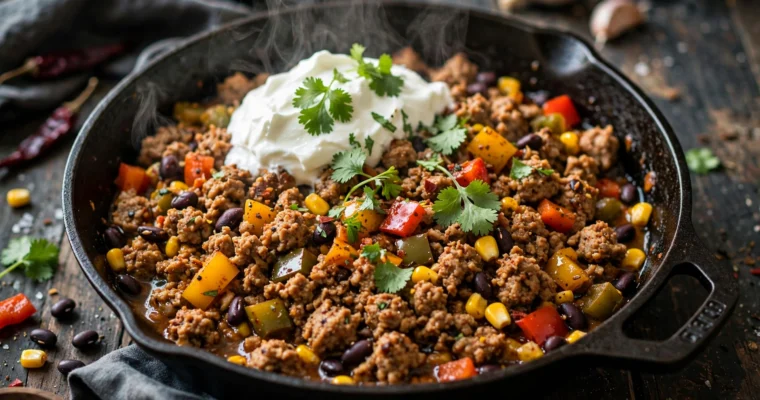
Some nights you need dinner on the table in 20 minutes flat — and this high protein turkey skillet delivers exactly that, with a whopping 38 grams of protein per serving. Lean ground turkey, black beans, sweet corn, and bell peppers simmer together in one …
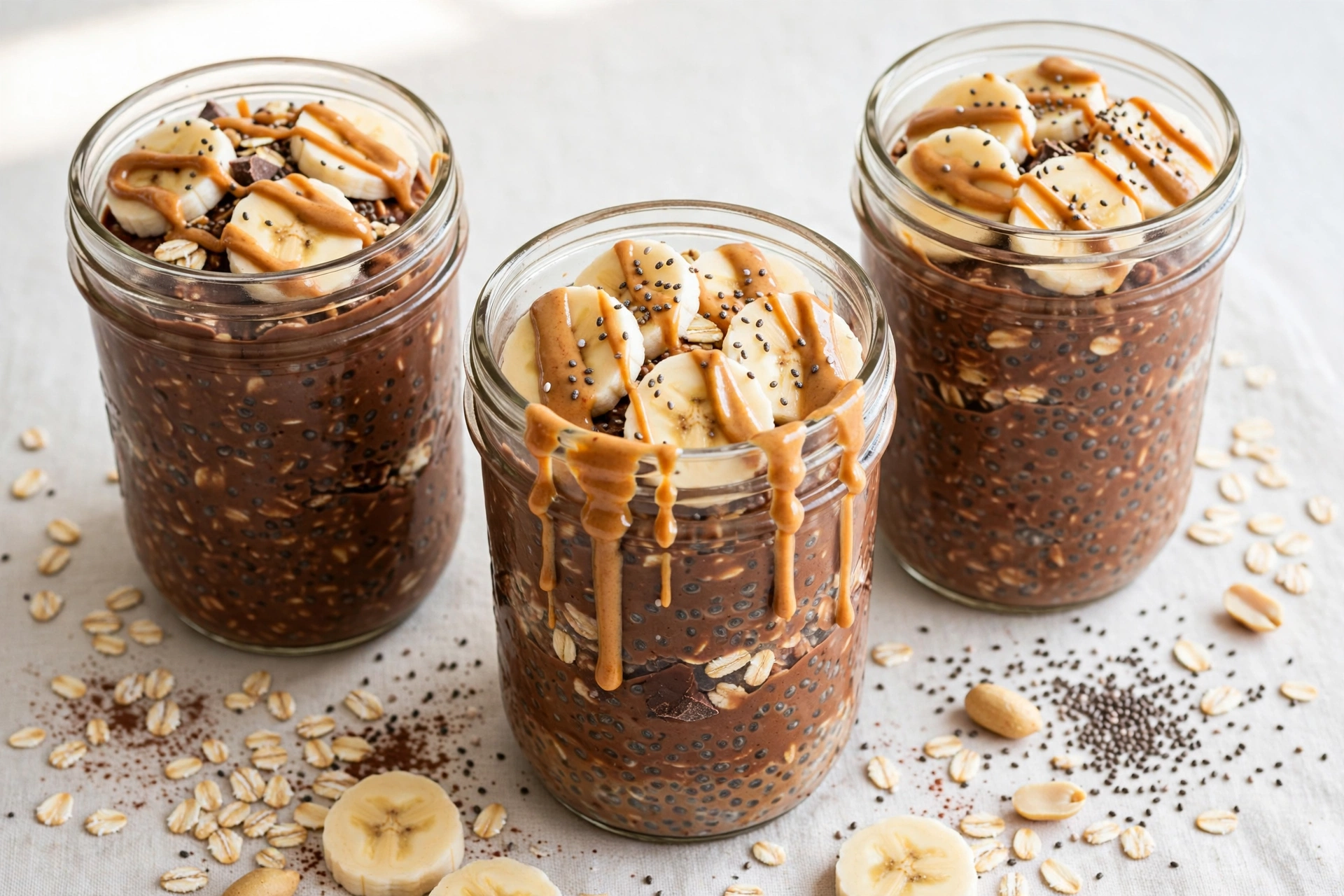
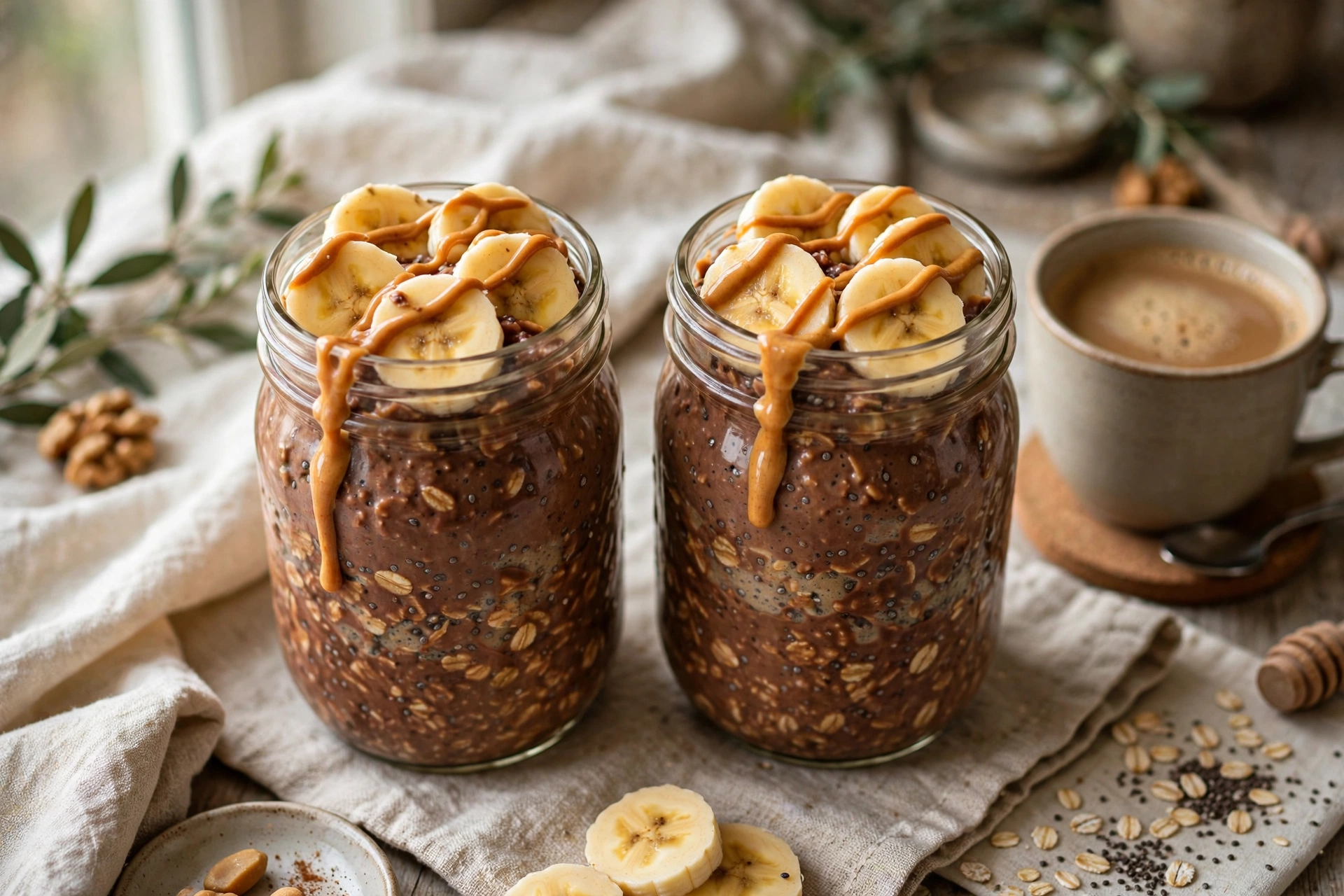
What if breakfast tasted like dessert, took 10 minutes to make, required zero cooking, and still delivered 30 grams of protein? That’s exactly what this protein overnight oats recipe does. Creamy chocolate oats, rich peanut butter, hearty chia seeds, and sweet banana come together in a mason jar while you sleep — and you wake up to a grab-and-go breakfast that keeps you full straight through to lunch.
Overnight oats are already a meal prep classic, but most versions are basically a bowl of carbs with barely 10 grams of protein. That won’t cut it if you’re training hard or trying to hit a serious protein target. This version fixes that with chocolate protein powder and peanut butter worked right into the base, plus chia seeds and milk rounding out the macros. The result is thick, rich, and genuinely satisfying — closer to chocolate pudding than to the bland oats you might remember.
30 grams of protein per serving. More protein than three eggs, in a breakfast you don’t even cook. Starting your day with 30g of protein sets up your entire macro target — and a high-protein breakfast measurably reduces cravings later in the day.
10 minutes of prep, zero cooking. Stir everything together at night, refrigerate, and grab it on your way out. No stove, no oven, no morning dishes beyond a spoon.
Tastes like dessert, eats like fuel. Chocolate protein powder, peanut butter, and honey create something genuinely indulgent. Nobody will believe this is health food.
Stays fresh for 3–4 days. Two jars Sunday night, two more Wednesday — breakfast handled all week. The oats get creamier as they sit, so day two and three taste even better.
Budget-friendly and pantry-based. Oats, peanut butter, milk, and honey are among the cheapest grocery staples. The only specialty item is protein powder, which you likely already own.
Infinitely portable. Sealed jars go from fridge to bag to desk. No reheating, no spills. Breakfast designed for real, busy mornings.
Ingredients You’ll Need
The dry base:
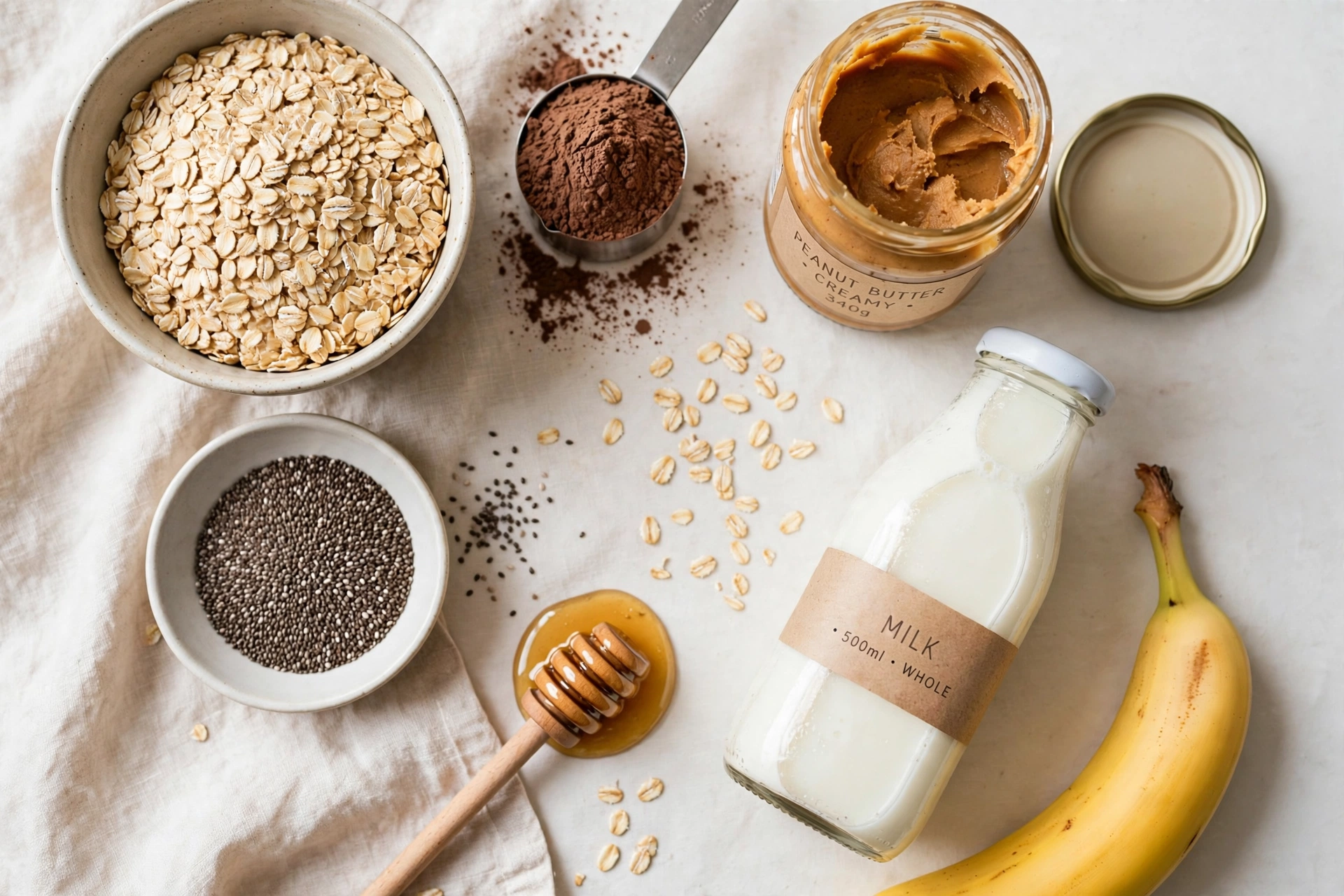
1 cup rolled oats — Use old-fashioned rolled oats, not instant and not steel-cut. Rolled oats absorb liquid perfectly overnight into a creamy, spoonable texture. Instant oats turn mushy; steel-cut stay crunchy and raw-tasting.
2 scoops (60g) chocolate protein powder — This is what takes the recipe from “oatmeal” to “protein overnight oats.” Whey, casein, or a whey-casein blend all work. Plant-based powders work too, though they absorb a bit more liquid — add an extra splash of milk if using pea or soy protein.
2 tbsp chia seeds — They gel overnight and give the oats a thick, pudding-like body, plus fiber, omega-3s, and a few extra grams of protein. Don’t skip them — they’re doing structural work here.
The wet ingredients:
2 tbsp natural peanut butter, plus more for topping — Creamy or crunchy, your call. Natural peanut butter (just peanuts and salt) gives the best flavor, but any peanut butter works. The drizzle on top isn’t just for looks — it adds richness in every bite.
1 1/2 cups milk of choice — Dairy milk adds the most protein (about 8g per cup). Unsweetened almond or oat milk keeps calories lower. Fairlife or other ultra-filtered milk is the macro nerd’s choice: more protein, less sugar.
1 tbsp honey or maple syrup — Just enough to round out the chocolate and balance the protein powder. If your protein powder is already very sweet, you can cut this in half.
The topping:
1 banana, sliced — Added just before serving for freshness and natural sweetness. The banana-peanut butter-chocolate combo is undefeated.
Easy substitutions: Any nut or seed butter can replace peanut butter — almond butter and cashew butter are both excellent. Swap the chocolate protein powder for vanilla and add a tablespoon of cocoa powder for a DIY chocolate version. Make it dairy-free with plant milk and plant-based protein powder. Out of chia seeds? Ground flaxseed works, though the texture will be slightly less thick.
How to Make Protein Overnight Oats
Step 1: Combine the dry ingredients. In a large mixing bowl — or directly in two mason jars if you want fewer dishes — add the rolled oats, chocolate protein powder, and chia seeds. Whisk them together dry first. This one small step prevents the clumps of dry protein powder that ruin otherwise perfect overnight oats.
Pro tip: Sift the protein powder through a small mesh strainer if yours tends to clump. Thirty seconds now saves you from chalky pockets later.
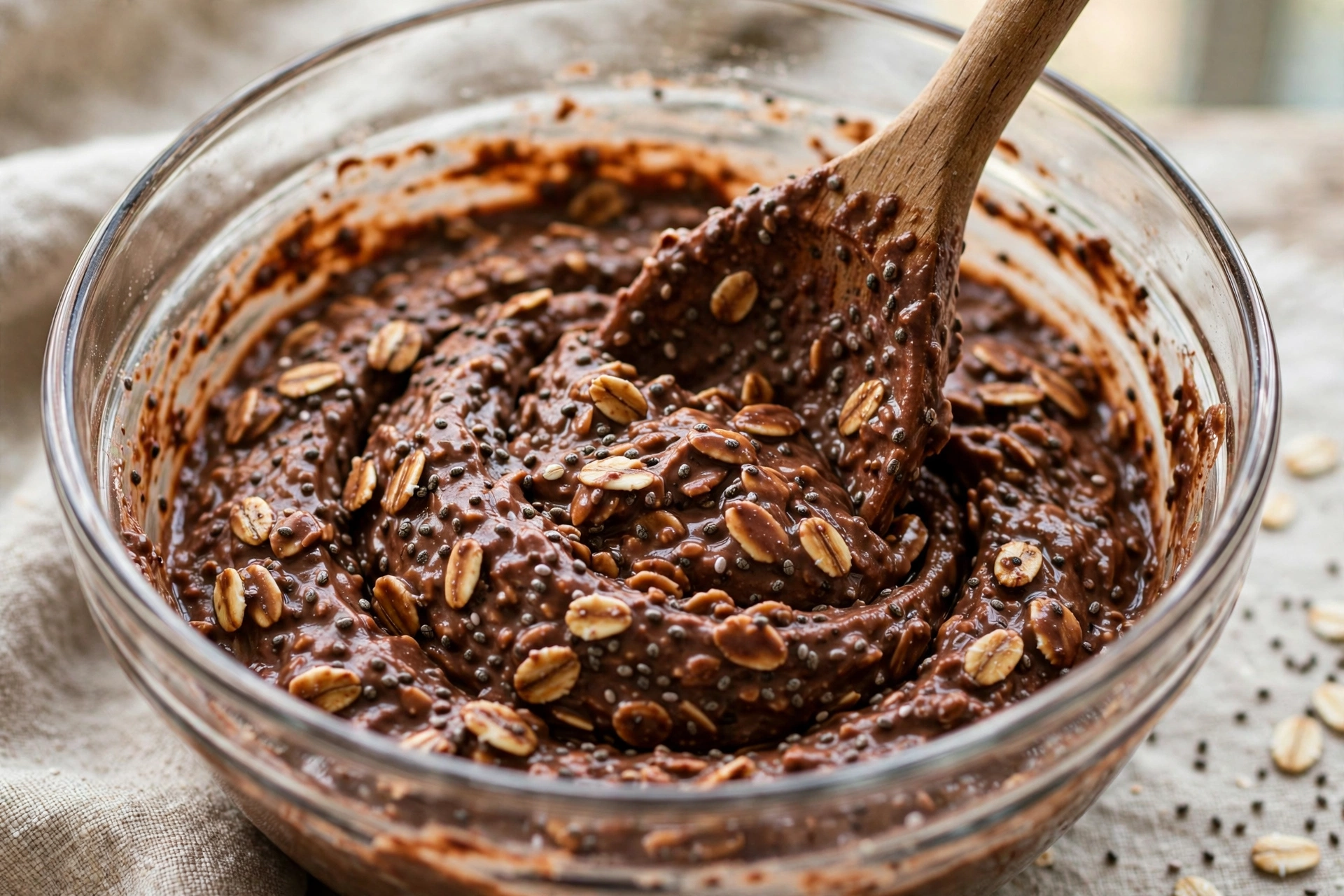
Step 2: Add the wet ingredients. Add the peanut butter, milk, and honey to the dry mix. Stir thoroughly until everything is fully combined and no dry powder remains at the bottom or edges. The mixture will look thin and soupy at this stage — that’s completely normal. The oats and chia seeds will absorb the liquid overnight and transform into something thick and creamy.
Pro tip: Warm the peanut butter for 10 seconds in the microwave before adding it. It stirs in effortlessly instead of clinging to your spoon in one stubborn blob.
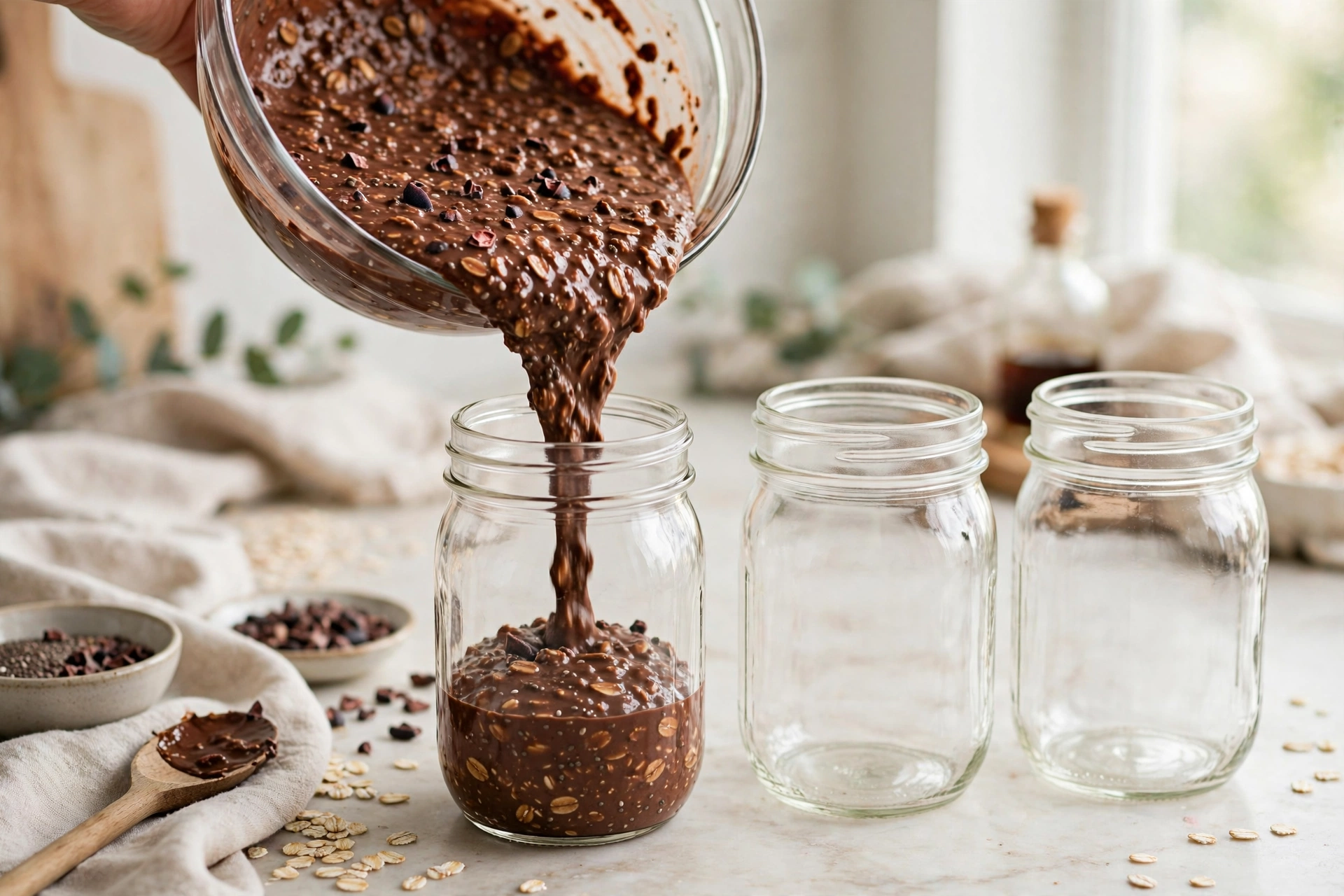
Step 3: Portion and refrigerate. If you mixed in a bowl, divide the mixture evenly between two mason jars or airtight containers (about 1 1/2 cups each). Seal tightly and refrigerate for at least 6 hours — overnight is ideal. The minimum is 6 hours; anything less and the oats will still be chewy in the center.
Pro tip: Wide-mouth pint jars are the perfect vessel. They’re the right size, they seal well, and you can eat straight from the jar.
Step 4: Top and serve. In the morning, give the oats a good stir — they’ll have thickened considerably. Top each jar with fresh banana slices and an extra drizzle of peanut butter (warm it for 10 seconds so it drizzles beautifully). Eat cold, straight from the fridge. No reheating needed, ever.
Pro tip: Add the banana just before eating, not the night before. Sliced banana browns and gets mushy overnight; fresh slices make the whole jar taste brighter.
Meal Prep and Storage Tips
These protein overnight oats keep 3–4 days refrigerated. Make a batch Sunday night for Monday–Wednesday, then a quick second batch Wednesday night. The texture actually improves as the flavors meld.
Add toppings fresh. Banana, berries, or a peanut butter drizzle go on right before eating — toppings added the night before turn soggy or brown.
Stir before eating. The mixture settles overnight with occasional liquid on top; one good stir restores the creamy texture.
Too thick? Too thin? Protein powders absorb liquid differently. Too thick in the morning — stir in a splash of milk. Too thin — add an extra tablespoon of chia seeds the night before. One batch teaches you how your powder behaves.
Use airtight jars. Oats absorb fridge odors surprisingly well — genuinely airtight lids keep your chocolate breakfast tasting like chocolate.
Nutrition and Macros
Here’s the full breakdown of these protein overnight oats per serving (1 of 2 jars):
Calories: 520
Protein: 30g
Carbohydrates: 62g
Fat: 18g
Fiber: approximately 11g
Thirty grams of protein at breakfast is a genuine game-changer for most people. The average breakfast in the US contains just 10–15 grams of protein, which leaves you hungry by mid-morning. Doubling or tripling that intake at your first meal improves satiety for the entire day — multiple studies link high-protein breakfasts to reduced calorie intake later in the day without any conscious effort.
The 62 grams of carbs come mostly from oats, banana, and honey — slow-digesting, fiber-rich carbs that release energy gradually rather than spiking your blood sugar. The 11 grams of fiber (from oats, chia, and banana) also support gut health and keep you feeling full.
As always, treat these numbers as estimates. Your exact macros depend on your protein powder brand (they vary wildly — anywhere from 20 to 30g per scoop), your milk choice, and how generous you are with the peanut butter drizzle. When in doubt, plug your specific brands into a nutrition app.
Recipe Variations
Strawberry Cheesecake Overnight Oats: Swap chocolate protein powder for vanilla, skip the peanut butter, and layer the oats with fresh sliced strawberries and 2 tablespoons of Greek yogurt per jar. It tastes like strawberry cheesecake filling for breakfast, with roughly the same 30g of protein.
Apple Pie Overnight Oats: Use vanilla protein powder, swap peanut butter for almond butter, and stir 1/2 teaspoon of cinnamon into the base. Top with diced apple and a sprinkle of granola in the morning. Cozy fall flavors, same grab-and-go convenience.
Mocha Overnight Oats: Add 1 teaspoon of instant espresso powder to the dry ingredients. The coffee deepens the chocolate flavor dramatically and gives you a gentle caffeine lift with breakfast. Top with a few dark chocolate chips if you’re feeling fancy.
PB&J Overnight Oats: Keep the peanut butter base but swap chocolate protein powder for vanilla, and top with fresh raspberries or a spoonful of low-sugar jam instead of banana. A nostalgic flavor combo with a serious protein upgrade.
Frequently Asked Questions
How much protein is in these overnight oats? Each serving (one jar) contains 30 grams of protein and 520 calories — mostly from the protein powder, plus peanut butter, chia seeds, milk, and oats.
Can I make protein overnight oats without protein powder? You can, but protein drops to roughly 14–16g per serving. Compensate by swapping some milk for Greek yogurt (about 10g protein per half cup) and adding an extra tablespoon of peanut butter.
How long do protein overnight oats last in the fridge? 3–4 days in airtight containers. Always add the banana fresh just before eating. If the oats smell sour or the texture seems off, discard them.
Why are my overnight oats so thick (or so thin)? Protein powder brands absorb liquid very differently — that’s the number one variable. Too thick? Stir in milk in the morning. Too thin? Add an extra tablespoon of chia seeds overnight. One batch with your powder and you’ll have it dialed in.
Can I heat up overnight oats? Yes — microwave 60–90 seconds, stirring halfway. Heating thins the texture slightly, so add the banana after warming.
Are protein overnight oats good for weight loss? They can be excellent for it. 30g protein plus 11g fiber is extremely satiating, which naturally cuts snacking. Just measure the peanut butter drizzle and honey if you’re in a calorie deficit — they add up.
Final Thoughts
This protein overnight oats recipe proves that 30 grams of protein at breakfast requires zero cooking. Ten minutes at night, a mason jar, and you wake up to a chocolate-peanut butter breakfast that tastes like dessert.
In a large bowl or directly in two mason jars, combine the oats, protein powder and chia seeds.
Add the peanut butter, milk and honey. Stir until fully combined with no dry powder remaining.
Divide between two jars if mixed in a bowl. Cover and refrigerate at least 6 hours or overnight.
Top with banana slices and an extra drizzle of peanut butter before serving.
Notes
Keeps 3-4 days refrigerated — perfect for grab-and-go breakfasts. Swap some of the milk for Greek yogurt for even more protein.Nutrition per serving: Calories 520 | Protein 30g | Carbohydrates 62g | Fat 18g
If you’re tired of sad desk lunches that leave you raiding the vending machine by 3 PM, these high protein chicken meal prep bowls are about to change your week. Each bowl packs a massive 42 grams of protein, thanks to juicy paprika-spiced chicken breast …